Microplastics, pt 2

Found a couple of videos from Dr. Rhonda Patrick to illuminate the problems with and sources of microplastic exposure.

These are long but very worthwhile.

Warning: These are “Eye of Sauron” videos that may overwhelm you. Take breaks! I had to…

Takeaways:

  • Be cautious with your children’s clothing as they are still in development. Avoid polyester and rayon as they do shed micro- and nanoparticles of plastic.
  • Avoid using “moisture wicking” fabrics, especially because they are generally worn when exercising and, therefore, are heating up and stretching, which hastens the breakdown of the fabric.
  • Avoid drinking from plastic water bottles if possible. Be aware that some single-serve metal water bottles will have plastic lining. But of course, drink from these if they’re your only choice.
  • In the kitchen, avoid heating anything made or lined with plastic. That means avoid microwaving or even washing in high temperatures. It’s best to just throw these away and replace them with glass.
  • Avoid situations where vinegars or acidic fruits are used in plastic (to-go salads, etc.) as the vinegar/acid will work the same as heat to break down the plastic and release chemicals.
  • Microwave popcorn bags are lined in BPA, and that is released in the microwave. Avoid!!
  • Aluminum cans are also lined with BPAs, which are forever chemicals, which take years to leave your body.
  • Avoid getting any hot beverage in a to-go cup (plastic-lined). Because these are cheap and flexible, the BPA is released quickly when hot coffee or tea is put in. Carry a reusable mug and ask the barista to use it directly.
  • Throw out any non-stick cooking pans and replace with steel or cast iron.
  • Silicon baking materials are not to be used or trusted.

Explore her videos for more info on health and microplastics… including how to hasten their excretion from the body. Hint: sulforaphane, fibrous diet, etc.
Microplastics

Soooo, yeah, we are eating and inhaling plastic. Little bits are being found in people’s brains… half a percent on average! 😬

Microplastics are even clogging up arteries, adding to obstructive artery problems, heart attacks and the like. Ugh.

Is it a problem? Yes.

Does it have a connection to cancer? Yes.

From what I’ve gathered, it can work in the same way an oyster creates a pearl. A bit of sand finds its way into the oyster, the oyster is irritated, the immune system reacts, and it coats the sand with layer upon layer of mucus or film until the irritating grain of sand is smooth.

In our bodies, foreign items are attacked by our immune system, too. It usually involves redness, swelling (inflammation), and mucus. Because the plastic isn’t going to break down, the immune response continues. This creates a “locus” or location around which cells may stop functioning properly due to prolonged inflammation.

This is why talcum powder causes ovarian cancer.

This is not to even mention the chemicals that leach from the plastic as it accumulates in our bodies, ☠️ ☣️ or leach into our food as we microwave items in plastic or in cheap steamer bags…

So anyway, if you are looking for a resolution today, New Years Day 2025, I recommend going through your kitchen cabinets and throwing out all the plastic, especially the thin stuff that comes from take-out containers.

Only drink from glass, metal, or pottery.

Get rid of any plastic cutting boards, which can break down as they are being used, with little plastic shavings going right into your food.

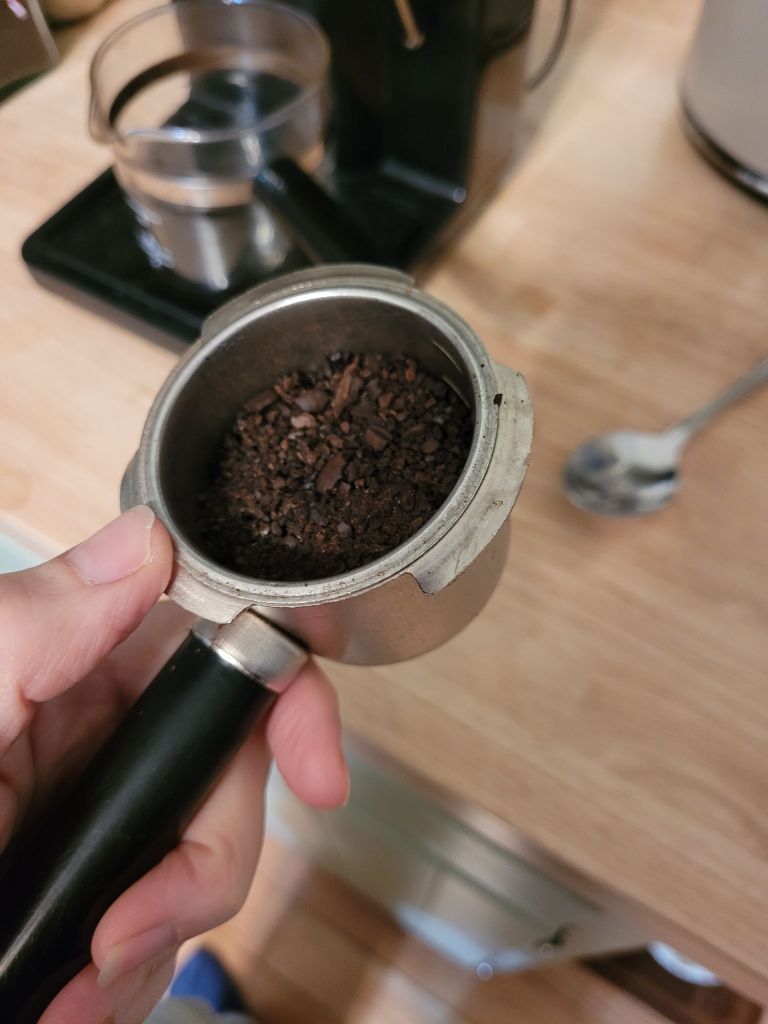
And please, get rid of any coffee maker that brews boiling water through plastic. Those Keurig and Nespresso cartridges are so dangerous!! I’m sure you can find an after-Christmas sale on a French press or a coffee maker with a steel grounds holder.

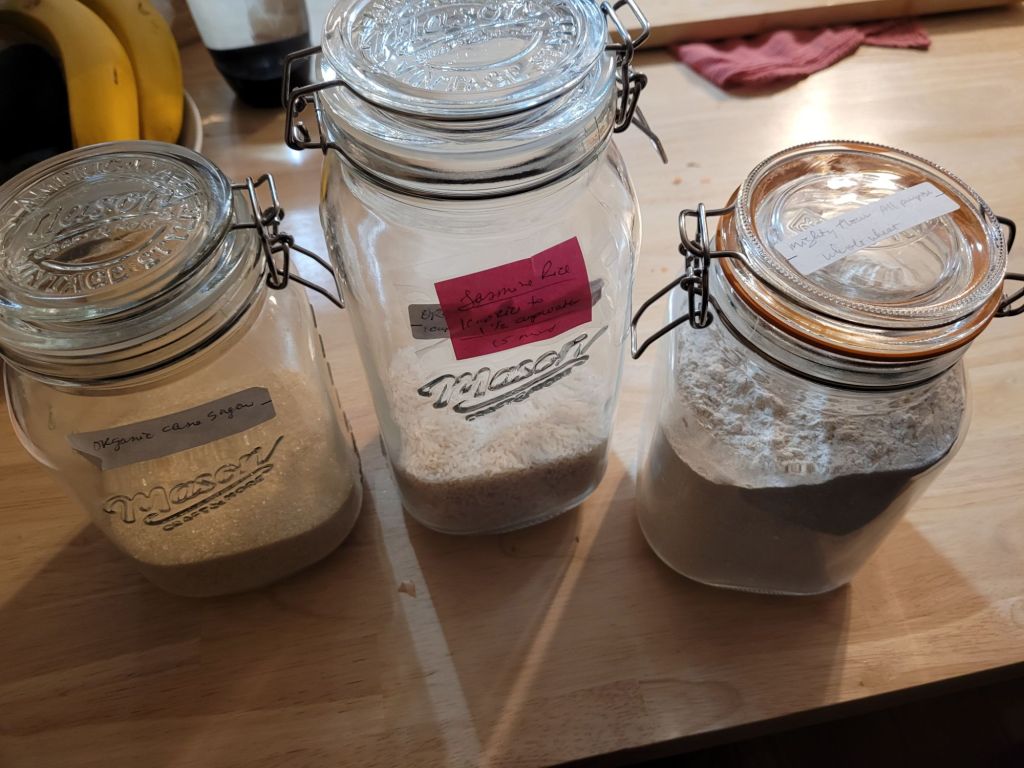
Storage containers and canisters should be changed out for glass. It’s healthier and looks good too.

A lot of food, even organic food, is sold in plastic. So, when you get home from the grocery store, spend time moving the food to glass storage, rather than leaving it in the original plastic.

Little steps. Let’s all take these little steps in the new year for our health, and for our families.

👣

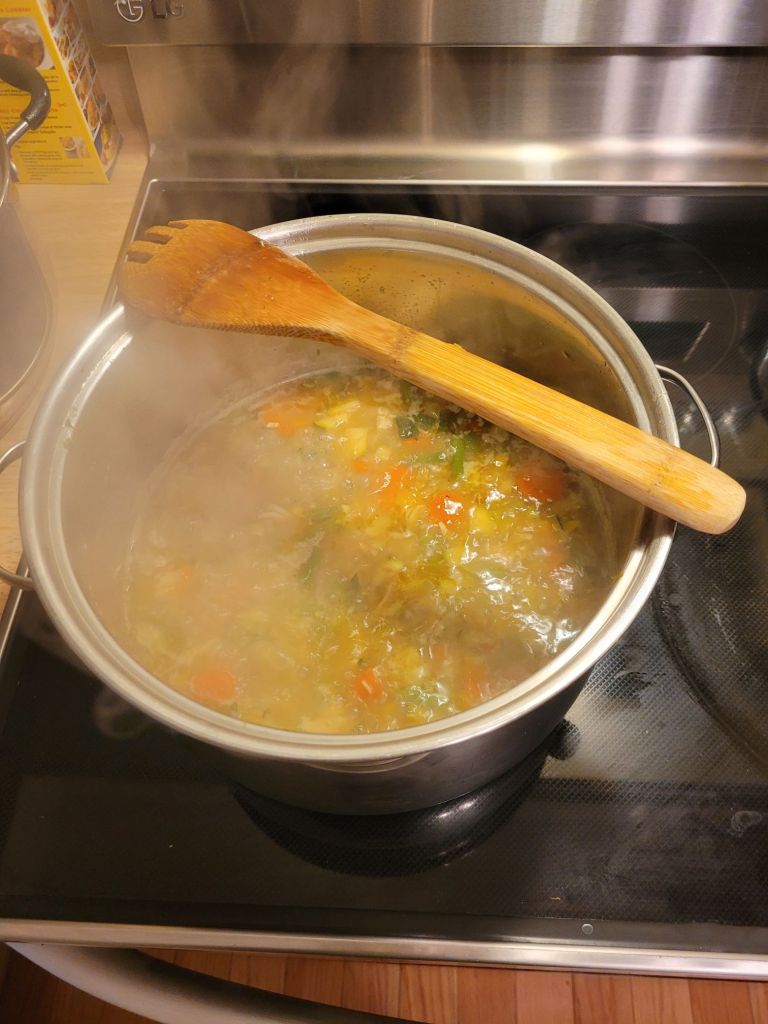
Sad Soup

When I’m sad or upset and don’t know what to do with myself, I make soup.

This one started as they all do, with EVOO and a chopped onion. Then, a lot of celery. Then some red, orange, and yellow sweet peppers. Then some garlic. Carrots, zucchini, spices, salt, pepper. Some green beans. Then the leftovers from a roasted chicken, including the “liquid gold” pot drippings, aka chicken fat.

It’s bubbling away on the stove.

My sister-in-law passed away today, from cancer.

In the days to come, we will plan a celebration of life.

We will celebrate her son’s 21st birthday, if he feels up to it.

We will eat comfort food like this chicken soup.

🥕🫑🧄🧅🫛🫘🌶🥔🥦🍅

BTW: If you are looking for ways to get 30 different plant-based foods into your diet each week (as I am), a soup like this will easily provide 15 or even more of those ingredients.

Stampede of Research

USF is in the news again. GO BULLS!! 🤙

This time it’s a study linking the Standard American Diet (SAD) and the rise in colorectal cancer in young people. The two main problems being ultra-processed foods and unhealthy oils, which cause chronic inflammation, which drives tumor growth.

Take a look:

https://www.usf.edu/news/2024/how-ultra-processed-foods-may-drive-colorectal-cancer-risk.aspx

Pick Up the Phone

I haven’t been writing much lately. There’s a slow and painful thing happening, and it feels wrong to write about it.

My sister-in-law is in hospice. She’s been fighting cancer for more than a dozen years. She’s done it all — surgeries, chemo, radiation, experimental drugs. She’s fought hard, dealt with debilitating side effects, and finally, her body is giving out.

It’s terrible.

What I want to say to you…

Ladies, pick up the phone and make an appointment for a mammogram and pap test.

Gentlemen, pick up the phone and get an appointment for a prostate exam. Do it.

Everyone over 45, get that colonoscopy booked. Put it on your calendar.

Everyone, no matter your age, book an appointment with a dermatologist. Get checked scalp to toes. Your skin is your largest organ! Don’t overlook it!

No matter your age, get a full blood workup. See if anything is out of normal ranges. Check your fasting glucose (and plan to actually fast before getting the test). Ask for the hemoglobin A1C test and check that level — it’s so important to get a feel for your metabolic health. See my blog Are You Metabolically Healthy? to help understand the findings.

If you smoke or did in the past, talk to your provider about the low-dose CT scan for lung cancer. More info in my blog Stamp Out Lung Cancer.

Many cancers are treatable if caught early. If you have medical insurance, these screenings will be fully or mostly covered.

Finally, check yourself. Are there any lumps? Check your neck, throat, etc. Are there any spots on your skin? A weird mole, perhaps? Are you feeling easily winded or tired after light exercise? Does your sweat smell different? Are you shaky when you miss a meal? Unexplained headaches? Notice these little signals and discuss with your doctor.

Please don’t delay. ❤️ Your health and life are precious.

Pleased to Meet You

Hope you guess my name.

We’ve all heard that Rolling Stones song a million times: Sympathy for the Devil.

Today’s post is about sugar — and all the names that particular devil hides behind. Take a look … then go look at the ingredients panel on a few items in your kitchen.

● Agave juice

● Agave nectar

● Agave syrup

● Beet sugar

● Blackstrap molasses

● Brown rice syrup

● Brown sugar

● Buttered syrup

● Cane juice

● Cane juice crystals

● Cane sugar

● Cane syrup

● Caramel

● Carob syrup

● Castor sugar

● Coconut sugar

● Confectioners’ sugar

● Corn glucose syrup

● Corn syrup

● Corn syrup solids

● Crystalline fructose

● Date sugar/syrup

● Demerara sugar

● Dextrose

● Drimol

● Ethyl maltol

● Evaporated cane juice

● Flo malt

● Florida crystals

● Fructose

● Fructose corn syrup

● Fructose syrup

● Fructose sweetener

● Fruit fructose

● Fruit juice

● Fruit juice concentrates

● Glucose

● Glucose solids

● Glucose syrup

● Golden sugar

● Golden syrup

● Granular sweetener

● Granulated sugar

● Grape sugar

● High fructose corn syrup

● Honey

● Honibake

● Icing sugar

● Inverted sugar

● Isoglucose

● Isomaltulose

● Kona-ame

● Maize syrup

● Malt syrup

● Maltodextrin

● Maltose

● Maple

● Maple sugar

● Maple syrup

● Mizu-ame

● Molasses

● Muscovado sugar

● Nulomoline

● Panela sugar

● Powdered sugar

● Raw sugar

● Refiner’s syrup

● Rice syrup

● Sorghum syrup

● Starch sweetener

● Sucanat

● Sucrovert

● Sugar beet

● Treacle or treacle sugar

● Turbinado sugar

● Unrefined sugar

● Yellow sugar

Sugar Alcohols:

● Erythritol

● Hydrogenated starch hydrolysates

● Isomalt

● Lactitol

● Maltitol

● Mannitol

● Sorbitol

● Xylitol

Puzzlin’ you is the nature of my game!

Thankful

Thanksgiving was last week, and in that spirit, I’ve been making a list.

I’m thankful that my eyes are open now to the world of personal health, and personal responsibility for our health. The sheer amount of information and research is overwhelming and full of promise for the future of healthcare and cancer treatment.

I’m thankful to have a slow-moving condition. I really understand how lucky I am to NOT be in the shoes so many others are — finding out they have a disease and immediately needing to make decisions while they are in shock and have had no time to think, read, plan.

I’m so thankful to be able to make these changes and then see results in my weight, fitness, and bloodwork.

I’m so thankful to be able to influence and reinforce healthy habits within my family.

I’m so thankful for the brilliant doctors and researchers I’m learning about.

I’m thankful for my library card, YouTube, and the wonderful world of podcasts.

Thankful for my husband as we spend our 33rd Thanksgiving together.🦃🍁🧡

The blessings are overwhelming sometimes.

What are you thankful for?

Grateful

In college, I had a Grateful Dead t-shirt that said “Let Phil Sing” on the front.

On the back, it said, “Believe it if you need it. If you don’t, just pass it on.”

What an interesting sentiment.

I hadn’t thought about it in years, but it’s kinda what I’m trying to do here. Often, when I speak to someone about cancer, glyphosate/Roundup, new research, etc., I see signs that they don’t really believe or accept these things. I see their eyes begin to glaze over.

Honestly, if I didn’t have CLL, I wouldn’t want to think about any of these things. I would probably be hesitant to accept these ideas or to make any substantial changes in what I eat, how often I exercise, and all that.

I do hope that, because of my attempt to talk to them, or through this blog, that these folks will remember and sort of circle back to me when and if they need it. Or, if they know someone who is facing similar problems, that they (or you) will pass it on.

✌️❤️🧸

RIP Phil Lesh

1940 – 2024

Promising Developments

As more and more physicians begin to understand the correlation between mitochondrial dysfunction and diseases such as cancer (and diabetes and dementia, and possibly others), I’m positive that some good things will happen.

One exciting thing is that, with the use of continuous glucose monitors, more and more people are able to see how their food choices impact this process, and then make better food choices.

Another exciting thing is that people are becoming aware of the issue and switching to ketogenic diets, which could reverse diabetes or manage (slow) the progression of cancer.

A new theory of cancer origin was recently introduced. It’s called the mitochondrial-stem cell connection (MSCC) (Martinez, et al., 2024). It builds on two other theories: Dr. Seyfried’s metabolic theory and the cancer stem cell (CSC) theory. I’ll put a link at the bottom if you want to learn more about that. I should mention that Dominic D’Augustino is one of the “et al.”

The exciting thing about this paper recently published on MSCC is that it proposes FIXING the underlying issue rather than focusing on killing cancerous cells.

In the past, most cancer therapies were built on the notion that cancer was genetic…  it happened to those who were genetically predisposed to it… and the assumption was that to fight it meant to kill the cells, cut them out, radiate them, etc.

You could say that current cancer treatments are like playing whack-a-mole in an arcade. This new paper suggests we stop wracking the moles and simply unplug the machine from the wall.


Here are some excerpts. I will link the full paper below.

This connection between CSCs and mitochondria appears to be crucial at all stages of cancer (Martinez, et al., 2024).

These (standard) therapies do not restore OxPhos and sometimes even alter it (Averbeck & Rodriguez-Lafrasse, 2021; Gorini, et al., 2018). Furthermore, standard therapies only target bulk cells but cannot target cancer stem cells (Lytle, et al., 2018), whereas it is cancer stem cells that have the strongest tumorigenic potential (Adams & Strasser, 2008) and are involved in metastasis.

● Thus, after reviewing the literature on various therapies capable of targeting the MSCC, we selected, based on in vitro and in vivo studies, several orthomolecules, drugs, and additional therapies that have demonstrated an ability to enhance OxPhos, reduce fermentable fuels, and target CSCs and metastasis. Furthermore, when supported by scientific literature, we included case studies of cures using monotherapy in humans. From this combination, we developed a hybrid orthomolecular protocol, which is proposed as a new therapeutic strategy for cancer.

• The degree of malignancy could be directly correlated with significantly lower mitochondria and lower total respiratory capacity in tumor cells (Elliott, et al., 2012; Pedersen, 1978; Seyfried, et al. 2020).

• In order to grow and survive, cancer cells require the primary fuels glucose and glutamine to compensate for OxPhos insufficiency. The respiratory impairment induces overexpression of oncogenes and inactivation of tumor-suppressor genes, which contribute to abnormal energy metabolism in cancer. To date, no evidence has demonstrated the growth of any tumor cells, including CSCs, occurs with the deprivation of fermentable fuels (glucose, pyruvate, or glutamine) (Lee, et al., 2024; Liao, et al., 2017; Holm, et al., 1995; Mathews, et al., 2014; Pastò, et al., 2014).

📖

Read the full paper on MSCC:

https://beatcancerfoundation.org/blog/exciting-news-peer-reviewed-publication-of-groundbreaking-cancer-protocol

Read more about cancer stem cell theory:

https://pmc.ncbi.nlm.nih.gov/articles/PMC6594320/

What’s So Bad About Sugar, Anyway?

And what does it have to do with cancer, or the risk of cancer?

There have been many theories about how cancer originates in the body.

Dr. Thomas Seyfried of Boston College published the theory that cancer begins with chronic metabolic dysfunction — that is, mitochondria within a cell not being able to create good energy for a prolonged period of time — which causes them to begin creating energy through a fermentation process rather than through oxidative phosphorylation, often called OxPhos (Seyfried & Chinopoulos, 2021).

This is the key difference between healthy cells and cancerous cells: healthy cells use oxygen to create energy, while cancerous cells have reverted to an easier, ancient way to create energy (possibly from before Earth had a proper atmosphere) through fermentation of glucose (sugar) and an amino acid called glutamine.

This difference in mitochondrial function links all cancers together, regardless of which organ it appears within.

We have known this for a while. Did you know that PET scans, widely used to seek out and image cancerous activity in the body, are taken after a person ingests a sugary dye? The sugar (glucose) goes straight to the hungry cancer cells, carrying the dye that is visible to the scanner.

Why does mitochondrial dysfunction happen?

One reason why mitochondrial dysfunction happens is simply the presence of too much sugar and simple carbohydrates in a person’s diet.

These need very little digestive breakdown and go straight to the mitochondria as glucose molecules.

The mitochondria become overwhelmed with the amount of glucose they are being asked to process. They bog down and ask for help from the pancreas and insulin. They push the remaining glucose out into the blood as a sticky residue.

Have you ever felt tired, sluggish, and slow after a big meal or too many carbs? Food coma?? That is an indication that your cells are overwhelmed. You’re in a glucose storm, and your body is suffering.

This leftover glucose in the blood sticks to your hemoglobin, or red blood cells. This is the residue measured by a Hemoglobin A1C test.