Thankful

Thanksgiving was last week, and in that spirit, I’ve been making a list.

I’m thankful that my eyes are open now to the world of personal health, and personal responsibility for our health. The sheer amount of information and research is overwhelming and full of promise for the future of healthcare and cancer treatment.

I’m thankful to have a slow-moving condition. I really understand how lucky I am to NOT be in the shoes so many others are — finding out they have a disease and immediately needing to make decisions while they are in shock and have had no time to think, read, plan.

I’m so thankful to be able to make these changes and then see results in my weight, fitness, and bloodwork.

I’m so thankful to be able to influence and reinforce healthy habits within my family.

I’m so thankful for the brilliant doctors and researchers I’m learning about.

I’m thankful for my library card, YouTube, and the wonderful world of podcasts.

Thankful for my husband as we spend our 33rd Thanksgiving together.🦃🍁🧡

The blessings are overwhelming sometimes.

What are you thankful for?

Grateful

In college, I had a Grateful Dead t-shirt that said “Let Phil Sing” on the front.

On the back, it said, “Believe it if you need it. If you don’t, just pass it on.”

What an interesting sentiment.

I hadn’t thought about it in years, but it’s kinda what I’m trying to do here. Often, when I speak to someone about cancer, glyphosate/Roundup, new research, etc., I see signs that they don’t really believe or accept these things. I see their eyes begin to glaze over.

Honestly, if I didn’t have CLL, I wouldn’t want to think about any of these things. I would probably be hesitant to accept these ideas or to make any substantial changes in what I eat, how often I exercise, and all that.

I do hope that, because of my attempt to talk to them, or through this blog, that these folks will remember and sort of circle back to me when and if they need it. Or, if they know someone who is facing similar problems, that they (or you) will pass it on.

✌️❤️🧸

RIP Phil Lesh

1940 – 2024

TedX Tampa Bay

Back when I was doing my deep dive into fasting, I stumbled upon this video. It caught my eye because Tampa is my home, and USF is my alma mater. Go bulls! 🤙

He cites Dr. Otto Warburg, who won the Nobel Prize in 1931 when he discovered that cancer cells create energy differently than healthy cells. Because of their damaged metabolic process, cancer cells require a lot of glucose, don’t use oxygen, and can’t switch over to using ketones (stored fat) for energy like healthy cells can. 

He also notes Dr. Thomas Seyfried of Boston College, who has continued Warburg’s work and is doing his best to shout from the rooftops, “Cancer is a metabolic disease!” … though the average oncologist probably hasn’t heard the news yet.

He goes on to discuss the use of hyperbaric oxygen therapy to damage cancer cells and hasten their demise while not damaging healthy cells.

He ends with a hopeful message and challenge to other researchers: “Can we manage cancer with non-toxic strategies?”


This video was recorded 10 years ago, and sadly, I have seen many people suffer and die from cancer in that time, but I haven’t seen any of them change to a keto diet or use hyperbaric oxygen.

Have you?


Just two months ago, a new paper was published by D’Augustino, along with others. The paper cites Seyfried’s research and proposes a very different approach to cancer therapy:

Targeting the Mitochondrial-Stem Cell Connection in Cancer Treatment: A Hybrid Orthomolecular Protocol

It involves vitamins C and D, zinc, hyperbaric oxygen, a keto diet, and a couple of anti-parasitic drugs.

I fear that this paper will not be taken seriously because it includes ivermectin, a drug that has the power to divide people along political lines.

Most folks don’t know that it is currently used to treat rheumatoid arthritis. And of course, we give it to our pets in the form of heartguard every month. ❤️ 🐩 🐕 🐈‍⬛ 🐈 ❤️

Black Plastic Kitchen Utensils

“…new research shows that many types of black plastics contain harmful flame retardants that shouldn’t be coming into contact with food.”

We all had them… just make sure you don’t have them anymore:

https://www.foodnetwork.com/healthyeats/news/throw-away-black-takeout-container-kitchen-utensils

The article also says to just throw them away… don’t recycle. Remove them from the cycle. Thank you!

Checkup

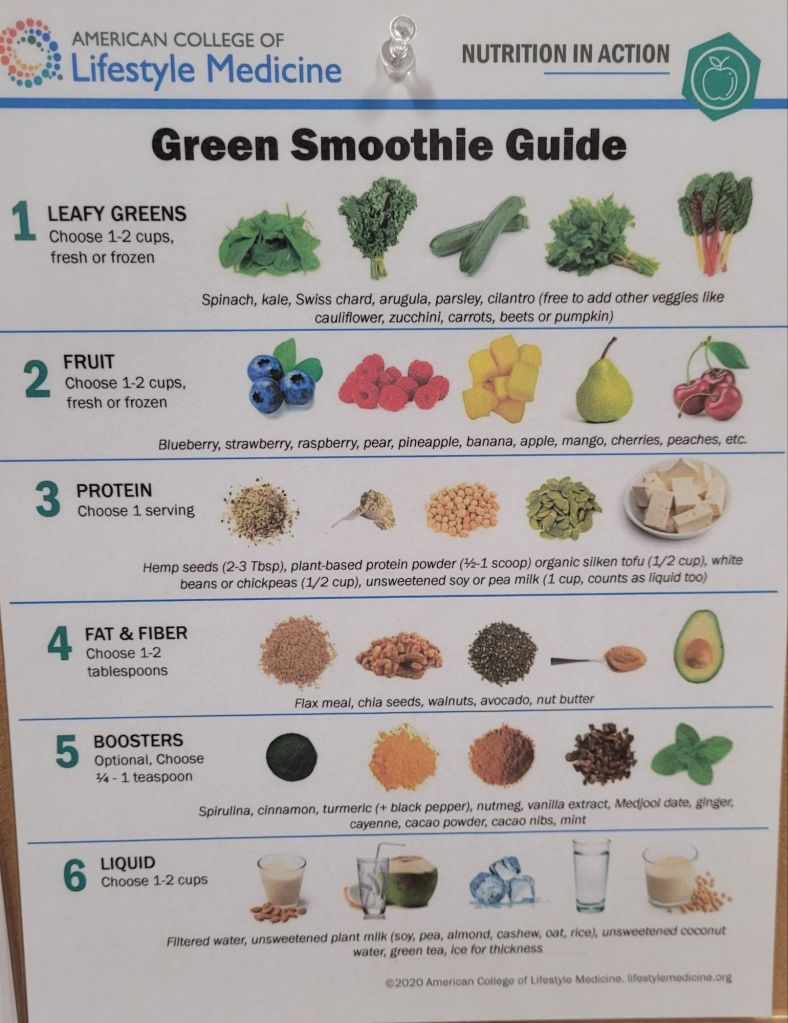
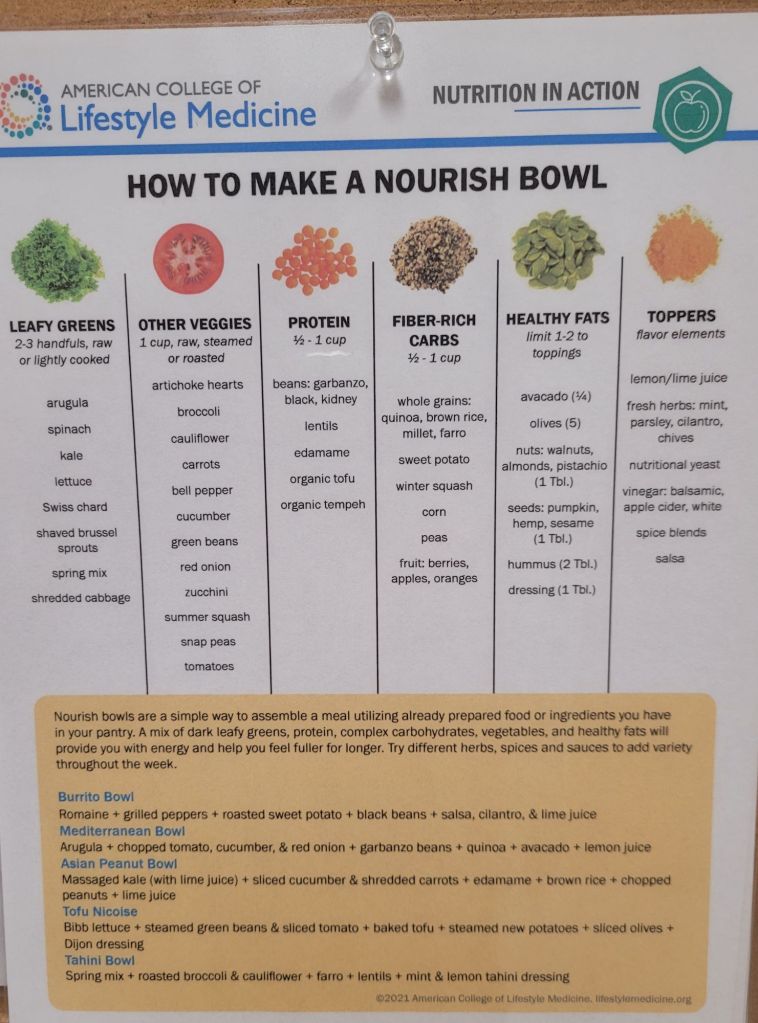
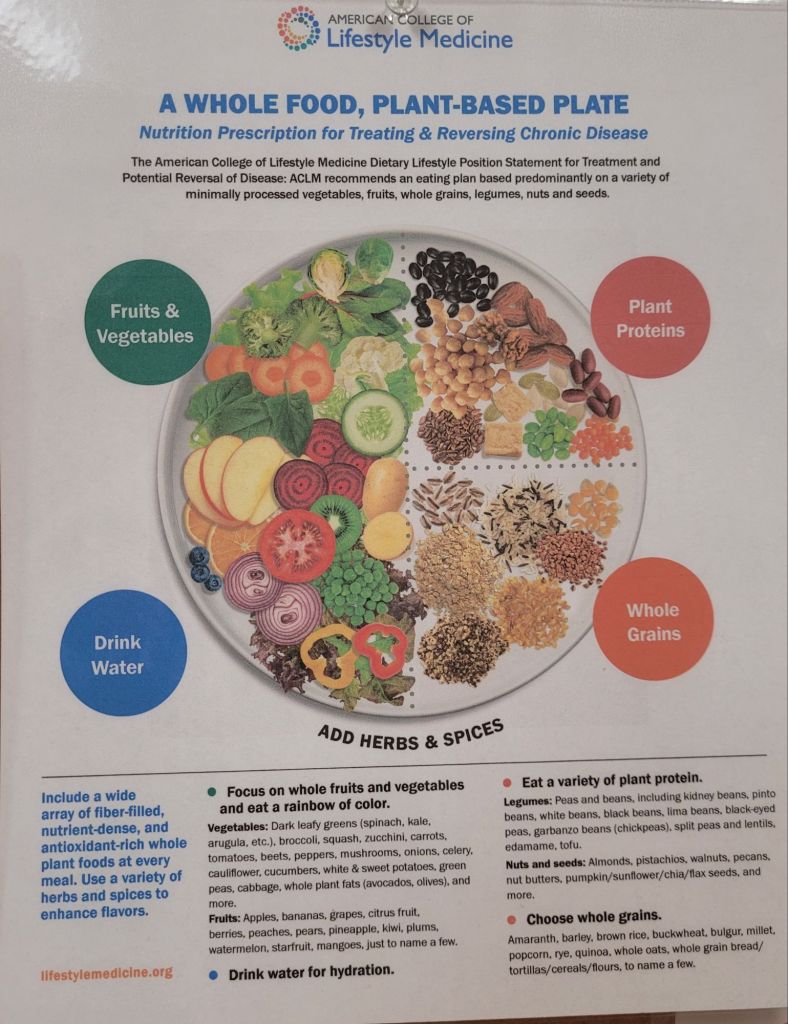
I had a checkup the other day and saw these on my doctor’s wall. How many times have you seen something like this?

There’s so much good info here. But prior to my diagnosis, I would have taken a little glance and not thought about it again. Now I’m pouring over them, matching this up with my own new patterns and habits.

Eat for Good Energy

These are the notes I took while reading Good Energy and watching Dr. Casey Means discuss her new plan for optimally healthy meals.

She (and many other doctors and nutritionists) wants us to ditch the food pyramid, which pushed carbs as the staple food, and move to something like this 5-slice pie above.

If we could design each meal to include one element from each section, we would be healthier in terms of our mitochondrial function.

I put it on the fridge so I see it every day, at every meal.

Tummy Troubles

I used to have tummy troubles all the time. ALL the time.

I was embarrassed to see a doctor about it. I minimized the issue and told myself it made sense that I had tummy troubles since many other people in my family also have this issue.

I dealt with it through restricting my diet, thinking that if I cut out the triggering food, things would stay on an even keel. (Now I wonder if the trigger was actually glyphosate).

Last year, we had a fish fry that really did a number on me. I was so worn out the next day that I tried something new: kombucha.

Overnight, everything changed. I’m happy to say that my stomach is very regular now.

I usually keep 1 or 2 bottles in the fridge and drink a “shot” or teacup-full after dinner. Once in a while, I’ll drink an entire bottle. It’s pretty high in sugar, so I try to go light on the amount in one serving.

I could kick myself for not trying it sooner, for not doing the research and figuring it out sooner. I could kick myself for continuing to suffer for so long. For decades.

Knowing what I know now, I wonder if this was the vulnerability in my particular system, which “let in the bad.”

Allowed prolonged mitochondrial dysfunction.

Let in the cancer.

Sigh.

Well, I can’t go back, but I can tell you: If you have tummy troubles, seek out some fermented foods.

  • Kefir
  • Saurkraut
  • Fermented pickles
  • Kombucha
  • Yogurt with active cultures
  • Kimchi

There’s a wonderful doctor you can find on YouTube named Dr. Will Bulsiewicz. He’s the gastro doctor you never knew (or admitted) you needed.

Fasting

Years ago, we caught a pledge week show on PBS about fasting. It was really interesting and surprising — not eating is healthy? Quite a paradigm shift from our day-to-day habits and culture.

My husband bought the book related to that program, read up, and eventually did a 3-day fast. He really liked how it made him feel better, sharpening his mind and jump-starting weight loss.

Fasting came back to mind when I got diagnosed. My husband and my best friend were immediately suggesting it, too.

Between my first meeting with my cancer hematologist and my second meeting, I greatly changed my diet and also did 3 fasts: one after the holidays, one for a colonoscopy, and one when my husband had his colonoscopy.

Looking at my bloodwork from those 2 appointments, there WAS a decrease in my markers. Plus, I felt better and had more energy.

Here is a great introduction to the power of fasting with Dr. Pradip Jamnadas.

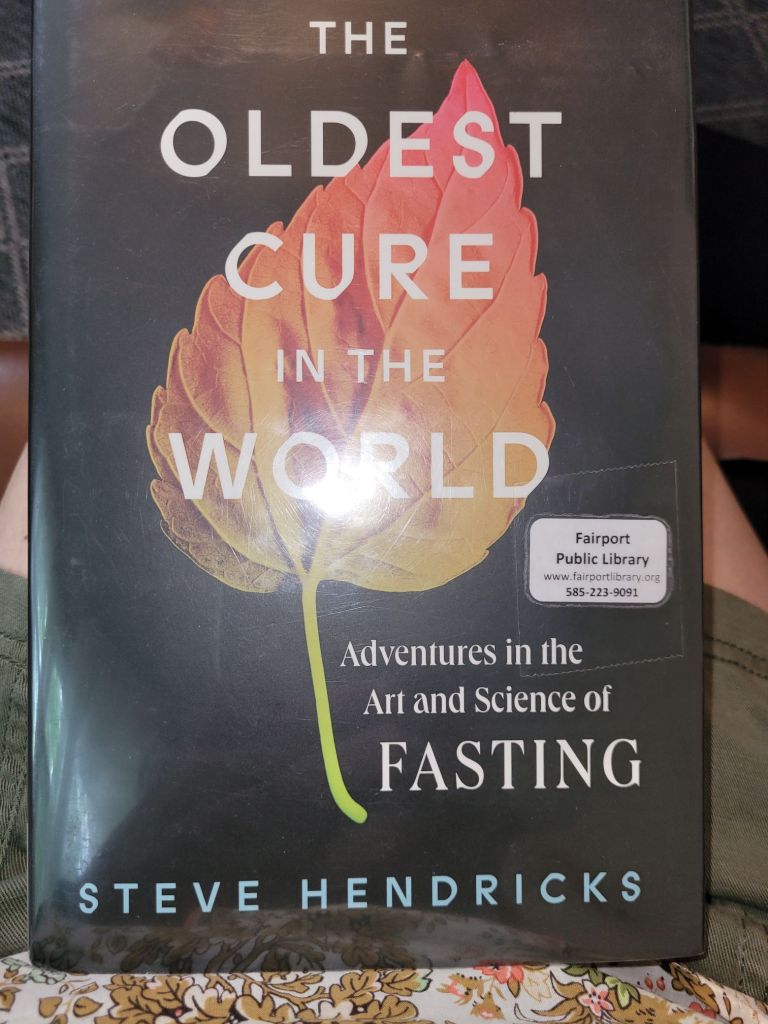
This book is amazing as well. Both are long but worth it.

Since then, I’ve learned a ton about fasting, intermittent fasting, meal timing, nutrition, and metabolic health. And it’s exciting to see fasting being talked about by some very cutting-edge researchers and physicians.

Sulforaphane

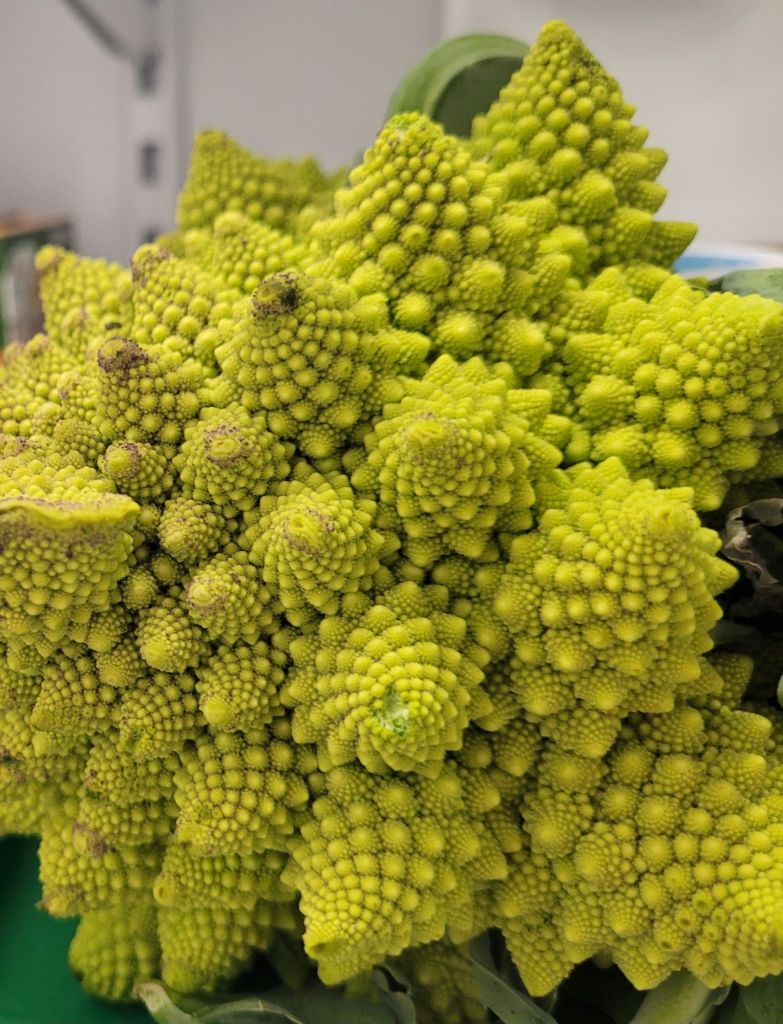
Isn’t it beautiful? Look at those Fibonacci swirls! 🤩

Sulforaphane is a phytonutrient compound found in cruciferous vegetables. Regular consumption is connected with an overall lower risk of cancer, and many studies show that it fights active cancer, too.

Here’s a quick list of cruciferous veggies:

  • Broccoli
  • Brussels sprouts
  • Cabbage
  • Cauliflower
  • Collard greens
  • Bok choy
  • Kale
  • Radish
  • Romanesco broccoli, pictured above
  • Watercress
  • Wasabi

The food that has the most sulforaphane is actually the broccoli SPROUT, which are  delicious in a salad. The sprouts can have 10 to 100 times the amount of sulforaphane than the mature vegetable.

I’ve definitely upped my intake this year, and I’m regularly eating sprouts & microgreens now.

Here are some interesting videos if you want to learn more. Dr. Eric Berg below points out that it has been studied a lot, more than 35 times.

In the video below, Dr. Moss shares that this research is very controversial, because most  chemotherapy drugs do not kill cancer stem cells, but this common, inexpensive vegetable DOES.

Learn more about these veggies: https://www.gardeningknowhow.com/edible/vegetables/vgen/cruciferous-vegetables.htm