CLL Seal

Just finished watching the Netflix series American Manhunt: Osama bin Laden with my husband. It’s a very interesting and well-made recounting of our CIA operations in the years after the 9-11 attack.

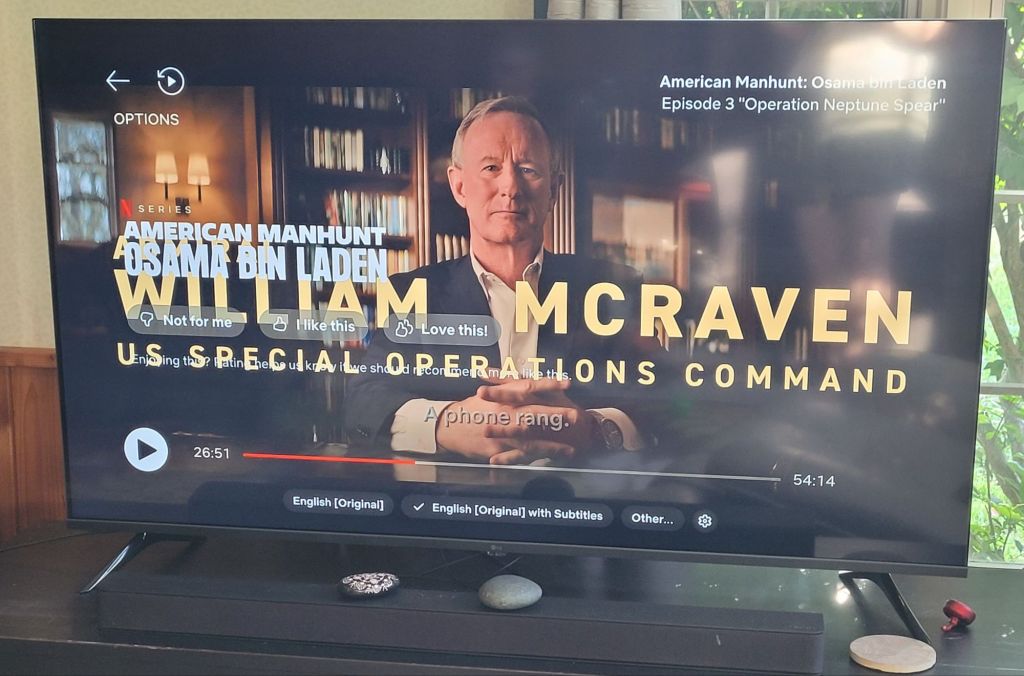
In episode 3, you meet and get to know William McRaven, a Navy SEAL who has CLL. He looks like he is in the peak of health, both in the recent interviews and in the photos from 2011.

He talks about being diagnosed in 2010 and how he used CLL as a reason to fly back to DC from Afghanistan when he was brought into this secret plan.

https://patientworthy.com/2018/11/22/decorated-admiral-battling-rare-cancer/

Thankful

Thanksgiving was last week, and in that spirit, I’ve been making a list.

I’m thankful that my eyes are open now to the world of personal health, and personal responsibility for our health. The sheer amount of information and research is overwhelming and full of promise for the future of healthcare and cancer treatment.

I’m thankful to have a slow-moving condition. I really understand how lucky I am to NOT be in the shoes so many others are — finding out they have a disease and immediately needing to make decisions while they are in shock and have had no time to think, read, plan.

I’m so thankful to be able to make these changes and then see results in my weight, fitness, and bloodwork.

I’m so thankful to be able to influence and reinforce healthy habits within my family.

I’m so thankful for the brilliant doctors and researchers I’m learning about.

I’m thankful for my library card, YouTube, and the wonderful world of podcasts.

Thankful for my husband as we spend our 33rd Thanksgiving together.๐Ÿฆƒ๐Ÿ๐Ÿงก

The blessings are overwhelming sometimes.

What are you thankful for?

Symptoms

In 2018, we moved from Florida to New York. A lot of things changed, from the water to the weather, the pollen, the food, the amount of sunlight, noise levels, stress levels … everything, really.

I started getting what I now call “6 hour colds” in the spring of 2019. I’d feel a tickle in my throat or cough or sneeze, go take a nap, and then wake up feeling fine. I wouldn’t get sick… not for more than 6 hours anyway. It was weird, but really, I didn’t think about it much. Whos going to complain about not getting sick?

I also started to notice that, after a lifetime of asthma, hay fever, and allergies, mine had gone away. In Florida, I could go through a jumbo box of Kleenex in a couple of days. In New York, my husband and son were having allergies, which they rarely had in Florida, and I wasn’t. Hmmm. Must be different pollen...

I mentioned earlier that I do some work for the American Lung Association, and a lot of it involves asthma training. I remember arguing over whether asthma was a chronic condition. I thought it wasn’t because, evidently, I had “outgrown” mine.

In early 2020, well, you know what happened. Covid! My family got it, but I didn’t. Hmm… I must be lucky, or maybe I’m one of those asymptomatic carriers.

In 2021, I went hiking with my kids at Letchworth Park, the “Grand Canyon of the East.”  It’s a beautiful place, and you should definitely check it out if you get a chance. We parked at the upper falls and walked down steep stone stairs to the middle falls, maybe a distance of a mile or so, mostly stairways but some flat land, too. I was fine on the way down. Getting back to the car was a real challenge, though, because those stairs were steep!

I was getting winded very easily and had to stop a few times. I had never felt like that before. When we got back up to the car, I let my daughter drive. I was too shaky and lightheaded to do it. I recovered after a bit of rest and was fine.

Later, knowing that I needed to get some exercise and build up my stamina, I joined a gym and started doing zumba and yoga regularly. Those hour-long classes never took me to that place of exhaustion I felt at Letchworth.


There were other odd occurrences, and I don’t know if they were symptoms of CLL or not.

It seemed like my hair was thinning, but then again, I was going through menopause and that’s fairly typical.

I gained weight and had less energy in the evenings, but that sounded like menopause, too.

Sometimes, usually after walking up 2 flights of stairs, I would see blue spots. When it happened, I’d just drink a big glass of water. I had never been in an environment like this before, with the heater on 5+ months of the year and a potbelly stove in constant use. It made sense to chalk it up to simple dehydration.

I smelled different, not in a gross way, but just different, more acidic. It motivated me to exercise more and sweat more. I also started going to a sauna in the cold part of the year, approximately once a month.

My armpits were puffy, which could have been from the weight gain.

In December of 2022, I got a mammogram, which revealed an enlarged lymph node in one armpit. It was monitored with ultrasound a couple of times in 2023 and seemed to be slowly growing.

So we did a biopsy, which revealed cancer markers. Then, a battery of blood tests to confirm the diagnosis.

And here I am…

What is CLL?

My cousin asked me some questions about CLL this weekend, and it took me a while to recall the answers.

I realize that I’ve been focusing on lowering my toxin load and risk factors and healing my metabolic functions (a positive thing for me, my family, and hopefully you, too) instead of focusing on my disease (a negative thing that I can’t change).

Which is actually good from a stress-management perspective. ๐Ÿง˜โ€โ™€๏ธ


Chronic lymphocytic leukemia is a cancer of the B cells, which are a type of white blood cell.

“Chronic” indicates that it is a lifelong condition, with no known cure.

“Lymphocytic” means that it involves a particular type of cell called the lymphocyte.

There are two main types of lymphocytes: B cells and T cells. B cells produce antibodies to attack bacteria, viruses, and toxins, while T cells destroy cells that have been taken over by viruses or become cancerous.

CLL is a dysfunction of the B cells.

“Leukemia” is a word for cancer of blood-forming tissues, including bone marrow. The word “leukemia” literally means “white blood” in Greek.


This is how CLL was explained to me by my doctor:

When a healthy person gets sick, the body sends out a variety of white blood cells to fight off the infection.

Some white blood cells are like army infantrymen — they go where they are told and do what they are told to do in order to fight the invader.

The B cell is like a Navy Seal. It goes in and locates the virus or germ, then rapidly tries a variety of ways to kill it. Once it succeeds in killing the invader, it sends a signal to the bone marrow, saying, “Make a million more cells that can kill the invader this way.” These cells are called activated B cells.

Once the invader is killed off and the virus or germ is conquered, there should be a signal that says a couple of things.

(I believe these are all sent by the B cell, but I’m not 100% sure.)

1. Thanks, bone marrow. You can stop making the activated cells now.

2. Thanks, activated cells. You can die off now. (This is called apoptosis, or “programmed cell death.”)

3. Thanks, immune system. You can relax now.

4. Let’s make some antibodies for future use.

So, in a person with CLL, these signals stop being sent. The activated B cells flood the bloodstream, and they don’t die off.

The very worst, most life-threatening part of having CLL is that those new antibodies are not being made. Thankfully, you still have the old ones that your body made when the B cells worked well.

My doctor told me that his little department of the cancer center lost the most patients during the covid pandemic, because this was a “novel” virus and most of them didn’t have antibodies similar to what was needed to fight the disease.

Another bad thing is that once you have CLL, you are more likely to develop another cancer. (It is closely correlated to skin cancer in men and women, and prostate cancer in men.)

The best thing about CLL is that it progresses very slowly. So you have a lot of time to make changes and figure things out.

Lymphatic Massage

Scrolling thru social media a while back, I discovered this interesting way to move the lymphatic fluid around through massage.

I made up a routine based on what I was seeing, using 18 repetitions (it matches the morning activation exercises I’ve been doing and Ayurvedic tradition). I do it in the shower every morning! And I incorporate a cold blast!

This video explains it well:

My shower routine:

  • Get in and wash as usual (with soap and shampoo that get great scores on the Yuka app ๐Ÿ‘).
  • After shampooing, begin at neck, and do 18 sweeping motions from ear to collarbone.
  • Next, 18 sweeping motions along each collarbone, towards center of body. Give each collarbone a few light taps at the end.
  • While one arm is over your head, 18 sweeping motions from center of ribcage (sternum) to armpit. Alternate beginning at the center of the ribcage with beginning at the waist and pushing up along your sides. Ladies, you can also check for any lumps or changes in that area.
  • Once you’ve done that, keep your arm raised over your head and sweep down from elbow to armpit. Put your thumb in the armpit at the end of each stroke. (Btw, armpits should feel like hollow pits. When I was getting diagnosed, mine were fat and puffy. Not good.)
  • 18 circular sweeps of the stomach area. Pretend you are pooh bear rubbing his tum. Use a clockwise motion.
  • Around this time, I put in my hair conditioner, turn the water so it is cool, and get my head out of the reach of the spray.
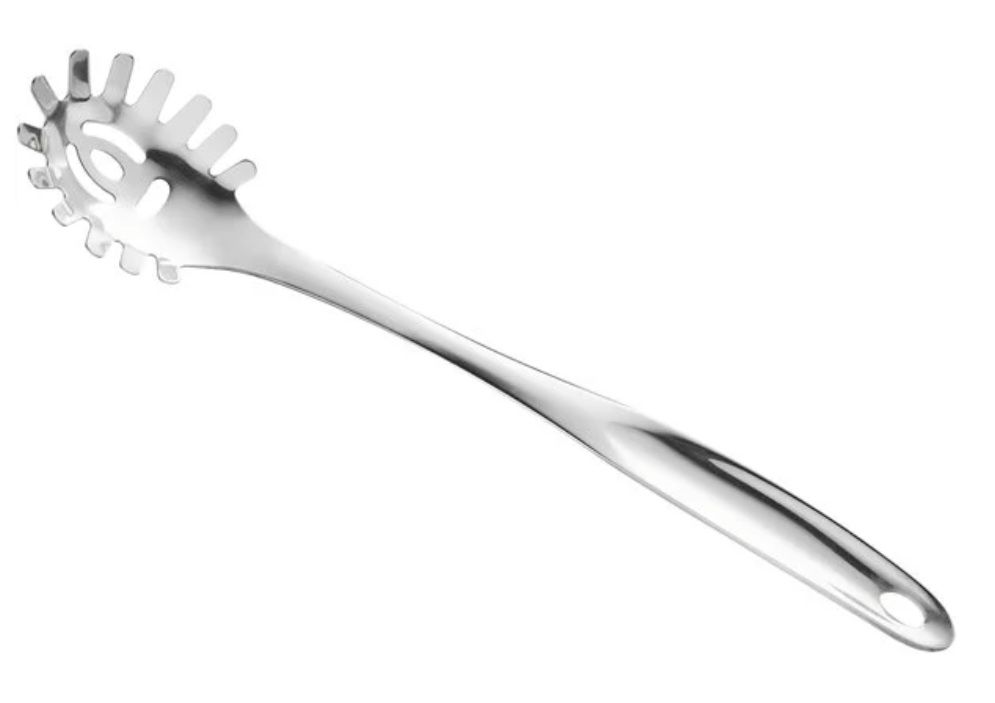
  • Now it’s time for legs. Remember those spaghetti servers? Make your fingers look like those. I’ll put a photo at the bottom of this post.
  • 18 strokes to the back of the leg using spaghetti fingers. I tend to sort of push a little. Move from ankle to back of knee.
  • 18 strokes to the shin, moving again from ankle to knee.
  • 9 to 18 pinches to just under the kneecap. There’s a pressure point there. It shouldn’t hurt. I’ll try to find a photo so you know how to position your hands.
  • Use both hands to encircle each leg just above the knee, and move up 18 times. Do both sides.
  • Lastly, do 18 presses to the pressure point around the aortas to the sides of the groin area.
  • Now turn the water as cold as you can handle and rinse out the conditioner.

You Ain’t Special

One of the first things you realize after getting diagnosed is that, unfortunately, everybody’s got something going on.

A friend of mine has Myasthenia Gravis. She just finished chemo for throat cancer. Now they’ve found a new cancer.

A neighbor is mourning the sudden loss of her husband.

A friend’s son just got married to a girl who had beaten cancer once. Now it’s back (they’re only 25!!! ๐Ÿ˜ซ).

Two of my coworkers have diabetes. Another just had to have her gall bladder removed. They are all younger than me (and it’s a small company, maybe 25 employees).

People used to say that “1 out of 4” people would have cancer during their lifetime. Now the rates are 1 out of every 2 men (50% ๐Ÿ˜ตโ€๐Ÿ’ซ) and 1 out of every 3 women (33%), at least in developed countries. (In places where people eat traditional foods, the rates are much lower.)

So yeah, I’m not special. I’m just one of the gang now. The CLL gang. The cancer gang. The chronic disease gang. Dammit.

Really hoping that we reach a tipping point soon, though. A point where the average person gets angry and wants answers and results and change. Not ribbons and awareness, not a fun run, but actual results.

Maybe we could demand that farms stop spraying glyphosate.

Canary

I had a few ideas for naming this blog, including “Defensive Living” and “Eye of Sauron,” but ultimately settled on the Cancer Canary. Because, like a bird in a mineshaft, my health indicates a much larger picture.

Finding out that my cancer (CLL) was linked to glyphosate (Roundup) caused me to look much closer at this situation, not just in how it affects me but how it affects us all.

Dr. Zach Bush explains it better than I can:

… this march of metabolic collapse, we now can map this back to this ever-increasing amount of herbicide, which was disrupting our metabolic function of the microbiome within soils, and ultimately, our gut, as we consumed the residues of those herbicides.

In the late 1980s, Monsanto and other chemical companies started to recognize the carcinogenic effect of these chemical compounds, and they published that — they showed that — with enough Roundup or glyphosate, you could induce cancer changes in cells. But they couldn’t imagine, at that time, in the late 1980s, that we would ever be able to apply that much chemical to the environment, because it would kill the crops themselves.

Because, in the late 1980s, we could not imagine that, within just a few short years, we would learn to genetically modify wheat, corn, soybeans, legumes of all kinds — even roses and petunias and everything else — genetically modify them to handle being sprayed directly with this glyphosate toxin.

The herbicide glyphosate would take off in 1996 as a direct crop treatment. Before that moment, you had to spray weeds directly and you had to keep the residues very low or else the corn crop would die.

With the advent of genetically-modified corn and beyond, we suddenly could spray the entire field directly — the food that we were eating — with these chemicals, and allow for the food to continue to be delivered.

And so, genetic modification of our crops has led to an explosion of the use of these chemical compounds in our food. And the result was high residues in not just soil systems, but water systems, because these are water-soluable toxins.

So the water-soluable toxins of glyphosate would get integrated into our freshwater runoff from the farms, wound up in our river systems, which would ultimately end up in oceans.

The whole time, you have evaporation going on, which allows the glyphosate to be present in the air you breathe and ultimately in the clouds that would then come down in rain.

That entire hydraulic cycle would become contaminated with this glyphosate chemical.

Glyphosate is now the most ubiquitous antibiotic on earth. It kills bacteria, fungi, protozoa, parasites. It kills the stuff it touches. And in so doing, it has denuded the diversity of life within our soil and water and air systems.

In the United States today, for example, 85% of the rain that we see and 85% of the air we breathe is contaminated with Roundup. This extraordinary fact has led to the phenomenon that we are all expressing this chemical within our systems.

In some recent clinical trials that we’ve done in our laboratory, we were measuring the effects of glyphosate on human systems, and measuring the ability of bacteria and fungi, through their communication network, to repair the damage done by this chemical.

So we brought in a bunch of people, studied their blood and urine, etcetera, and we could not find a single person that wasn’t peeing Roundup.

— Dr. Zach Bush, MD, Healing Secrets: The Wisdom of your Microbiome
Google

The first thing I did after reading my diagnosis was to Google this particular type of cancer I have. I’d never heard of CLL before!

Immediately, I found that it is linked to glyphosate, also known as roundup. Of course, I knew roundup was not good — for people and bees and Monarch butterflies… for the environment in general.

I had avoided it, never purchasing it for my own yard. How could I have a disease caused by something I’ve always avoided?

Back to the Google search bar… this time to search for foods with glyphosate residue. Number 1 is Cheerios. Well, I’ve eaten a bowl of Cheerios for breakfast for many, many years! Damn. And here I thought it was a healthy choice!

Also on the list, Nature Valley Granola bars. I bought those hundreds of times, a lunch box staple for the kids… and it’s poison. Friggin poison.

I’m going to stay positive and just say, for now, please be aware that mainstream food sources carry a heavy pesticide/herbicide load and many of these chemicals have links to cancer and other chronic diseases, such as Parkinson’s. I’ll write more in the future… but for now I just want to say a couple of things:

โ— Many chemicals are used in industrial farming, which is the source of all processed foods. In the US, these chemicals are “innocent until proven guilty,” meaning that they can be used until they are scientifically proven to cause harm. In many other countries, chemicals are “guilty until proven innocent,” resulting in a much healthier population.

โ— Organic food can be more expensive but it is worth it. Aldi and Trader Joe’s are great places to explore, and the prices are pretty good.

โ— Many imported foods are free of glyphosate and adhere to higher food safety and quality standards. Find yourself a good Italian grocer and look for “Made in Italy” on the label. Aldi carries many “Made in Germany” items, especially in October, and some imported pastas from Italy.

โ— Find a local farm or farmer’s market, ask them how they farm and what pesticide/herbicide/fertilizer they use, if any. Find someone you know and trust, and then support them with the money you used to spend on processed food.

โ— Glyphosate is used as a drying agent for foods when they are harvested. So, at the moment of harvest, a big dose is sprayed on foods like oats, wheat, beans, legumes, etc. This keeps harvested food from becoming moldy. Did you know this? I didn’t.

โ— I really wish I could travel back in time and stop eating Cheerios and other non-organic foods, but I can’t, so I’m telling you, in the hope that you can avoid my fate.

Changing your food sources is a very big step in defensive living… what you eat is really what you are, on a cellular level. You and your family are WORTH IT!