For 99% of my life, I’ve used either the Good Seasons spice packet or the Aldi knock-off to make my dressing with red wine vinegar, high quality olive oil, and a little bit of water.
The spice packets are both delicious and easy to mix in the Good Seasons bottle (you know what I’m talking about).
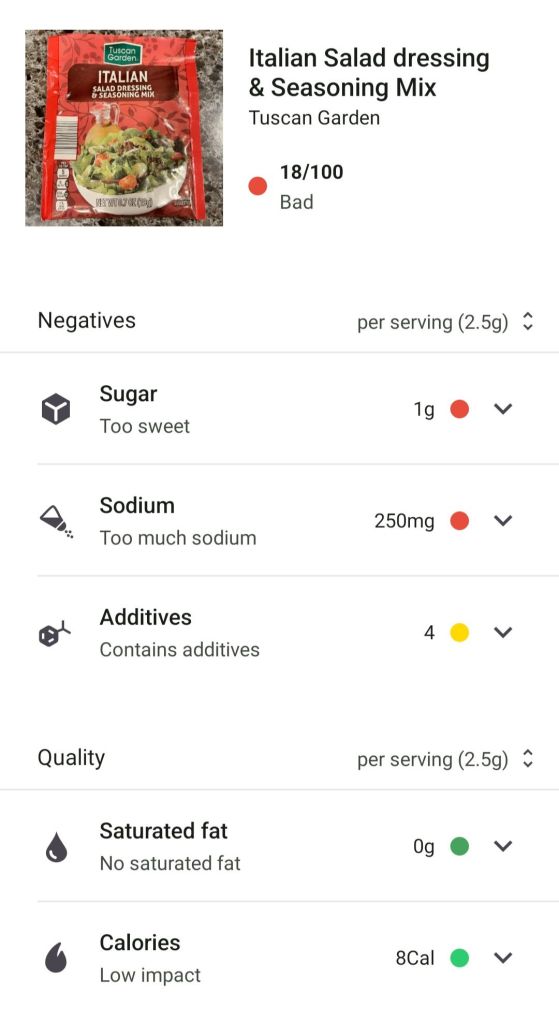
Recently, though, I scanned the Aldi and Good Seasons packet with the Yuka app. Both scored 18 out of 100… yuck!
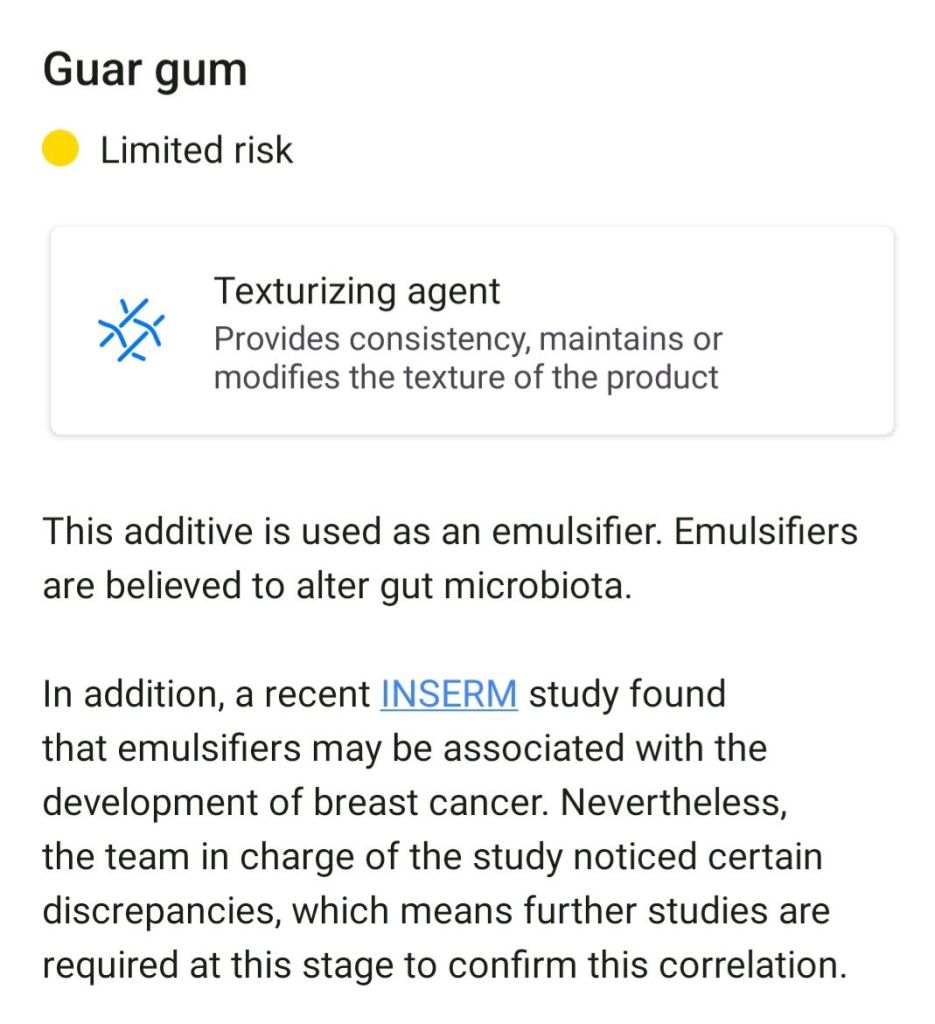
Both of the additives flagged “may be associated with” development of breast cancer.
It’s just a spice packet, though. How hard could it be to make it from scratch?
I decided to make my own. I used a big jar and mixed up a bunch, so it’s ready whenever I need it.
Copycat Salad Dressing Spice Mix
1 tablespoon garlic powder
1 tablespoon onion powder
1 tablespoon sugar
2 tablespoons oregano
1 teaspoon black pepper
1 teaspoon basil
0.25 teaspoon ground thyme
1 tablespoon parsley
0.25 teaspoon celery salt
2 tablespoons salt (use less if you want)
Put it all in a jar.
When you want to make the dressing, mix:
1 tablespoon of the spice mix above
1/2 cup of olive oil
1/4 cup vinegar
3 tablespoons water
Bon appetit!
Update: Great article from the Environmental Working Group:
Salads are so healthy, and I am lucky to have had them throughout my life as a regular part of the dinner meal, whether at my childhood home or my grandparents’ house.
It’s a tradition that my husband and I have kept going and one that I hope lives on as our kids make their own homes.
🥗
It was one of the first things I helped with as a child (one step up from setting the table). My Mom would tell me that a “true chef would never cut lettuce leaves with a knife” and would instead tear them gently. I’m not sure if that’s true, but it sounds right.
I’m sure she just didn’t want any little kids wielding a knife in her kitchen, lol.
Those salads usually included iceberg lettuce, tomatoes, and celery with a simple vinegar and oil dressing. Sometimes, we got fancy and added black olives or Spanish (manzanilla) olives.
And we always had the salad as the final course… the logic was that the roughage (fiber) and vinegar would escort all the other stuff from the night’s dinner through the system and do some clean-up work in the intestines.
Yes, we talked about this at the dinner table when I was too young to use a knife.
When we went to my grandparents’ house, the salad was similar but often included half an avocado. If half an avocado doesn’t sound like much to you, well… you must not have spent time in Florida prior to Hurricane Andrew. Those old style “Tampa avocados” were as big as a football.
If I had a time machine… that’s what I’d go get…
These days, I like to get fancy with my salads. I usually start with Romaine lettuce and tomato. Those are the basis.
To that, I add whatever we have, including fresh spinach, a shredded carrot, artichokes in vinegar, olives of any kind or a scoop of muffaletta, slices of sweet peppers, diced onion, mushrooms, cucumber, avocado, thinly sliced purple cabbage, celery, cheese (Feta or parmesagn), and any kind of sprout (broccoli, radish, alfalfa, etc.).
Sometimes, I throw in apple chunks, pear slices, or orange sections. Sometimes, we throw in sunflower seeds or crushed pistachios or cashews.
In the summer, I like to find new types of lettuce and new varieties of tomatoes at the farmers’ market.
My Nani had a trick where she would cut into a garlic clove and rub it on the inside of the bowl prior to adding any ingredients. I always seem to remember the trick too late. 😕
Lately, I’ve been moving my salad to the beginning of the meal, rather than the end. This is because of the hacks I recently learned to lower blood glucose levels.
Here’s the details on that, from the Glucose Goddess, Jessie Inchauspé who I hear just got her own TV show!!! 🙌
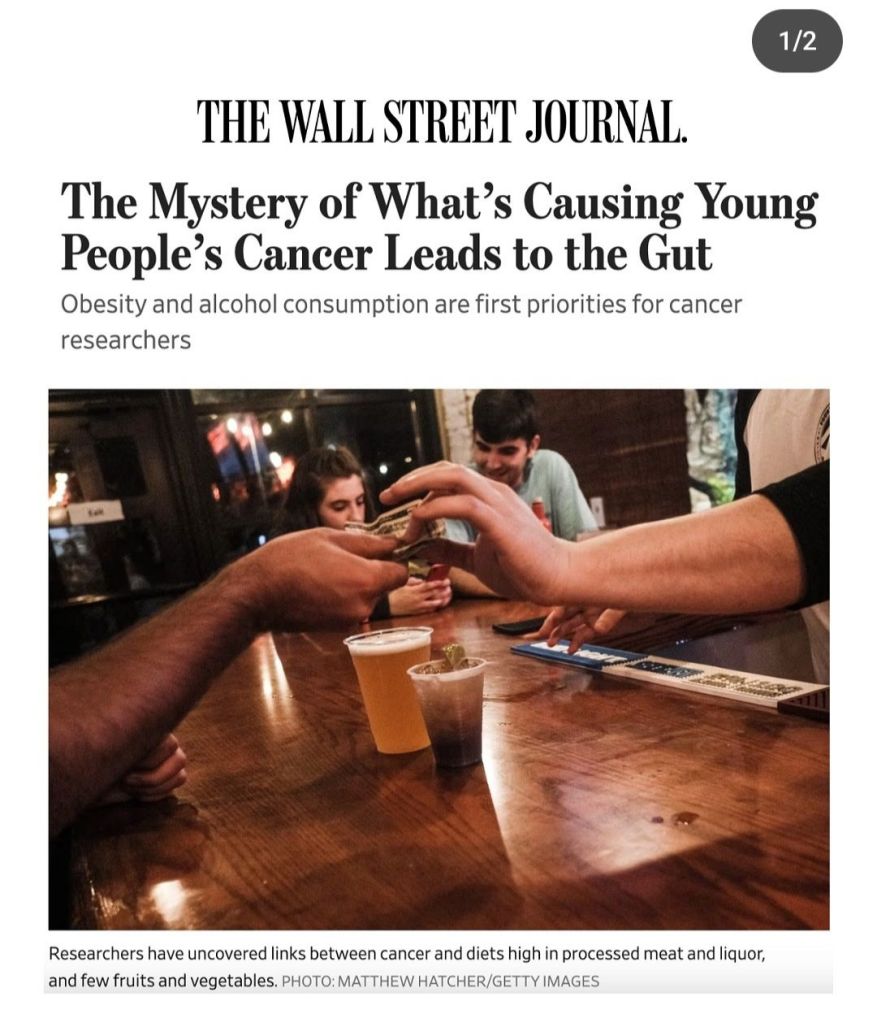
I’ve been in a “low-tox-living” algorithm for over a year now, but once in a while I see my concerns in the mainstream media, too.
Is it my imagination, or is the news about ultra-processed foods, pesticides, seed oils, food colorings, and other harmful food and drink ingredients appearing more and more?
This guy is a great source of food information. He does videos on YouTube and has a great social media presence! He’ll even teach you how to make your own ketchup to avoid buying junk.
Found a couple of videos from Dr. Rhonda Patrick to illuminate the problems with and sources of microplastic exposure.
These are long but very worthwhile.
Warning: These are “Eye of Sauron” videos that may overwhelm you. Take breaks! I had to…
Takeaways:
Be cautious with your children’s clothing as they are still in development. Avoid polyester and rayon as they do shed micro- and nanoparticles of plastic.
Avoid using “moisture wicking” fabrics, especially because they are generally worn when exercising and, therefore, are heating up and stretching, which hastens the breakdown of the fabric.
Avoid drinking from plastic water bottles if possible. Be aware that some single-serve metal water bottles will have plastic lining. But of course, drink from these if they’re your only choice.
In the kitchen, avoid heating anything made or lined with plastic. That means avoid microwaving or even washing in high temperatures. It’s best to just throw these away and replace them with glass.
Avoid situations where vinegars or acidic fruits are used in plastic (to-go salads, etc.) as the vinegar/acid will work the same as heat to break down the plastic and release chemicals.
Microwave popcorn bags are lined in BPA, and that is released in the microwave. Avoid!!
Aluminum cans are also lined with BPAs, which are forever chemicals, which take years to leave your body.
Avoid getting any hot beverage in a to-go cup (plastic-lined). Because these are cheap and flexible, the BPA is released quickly when hot coffee or tea is put in. Carry a reusable mug and ask the barista to use it directly.
Throw out any non-stick cooking pans and replace with steel or cast iron.
Silicon baking materials are not to be used or trusted.
Explore her videos for more info on health and microplastics… including how to hasten their excretion from the body. Hint: sulforaphane, fibrous diet, etc.
Soooo, yeah, we are eating and inhaling plastic. Little bits are being found in people’s brains… half a percent on average! 😬
Microplastics are even clogging up arteries, adding to obstructive artery problems, heart attacks and the like. Ugh.
Is it a problem? Yes.
Does it have a connection to cancer? Yes.
From what I’ve gathered, it can work in the same way an oyster creates a pearl. A bit of sand finds its way into the oyster, the oyster is irritated, the immune system reacts, and it coats the sand with layer upon layer of mucus or film until the irritating grain of sand is smooth.
In our bodies, foreign items are attacked by our immune system, too. It usually involves redness, swelling (inflammation), and mucus. Because the plastic isn’t going to break down, the immune response continues. This creates a “locus” or location around which cells may stop functioning properly due to prolonged inflammation.
This is why talcum powder causes ovarian cancer.
This is not to even mention the chemicals that leach from the plastic as it accumulates in our bodies, ☠️ ☣️ or leach into our food as we microwave items in plastic or in cheap steamer bags…
So anyway, if you are looking for a resolution today, New Years Day 2025, I recommend going through your kitchen cabinets and throwing out all the plastic, especially the thin stuff that comes from take-out containers.
Only drink from glass, metal, or pottery.
Get rid of any plastic cutting boards, which can break down as they are being used, with little plastic shavings going right into your food.
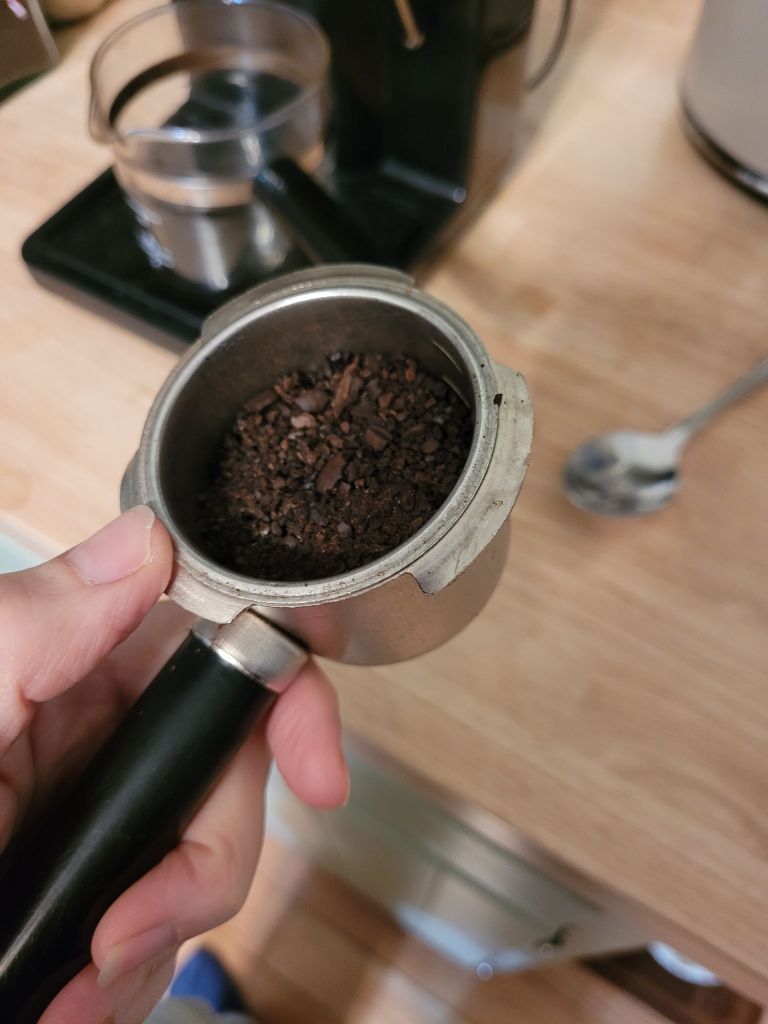
And please, get rid of any coffee maker that brews boiling water through plastic. Those Keurig and Nespresso cartridges are so dangerous!! I’m sure you can find an after-Christmas sale on a French press or a coffee maker with a steel grounds holder.
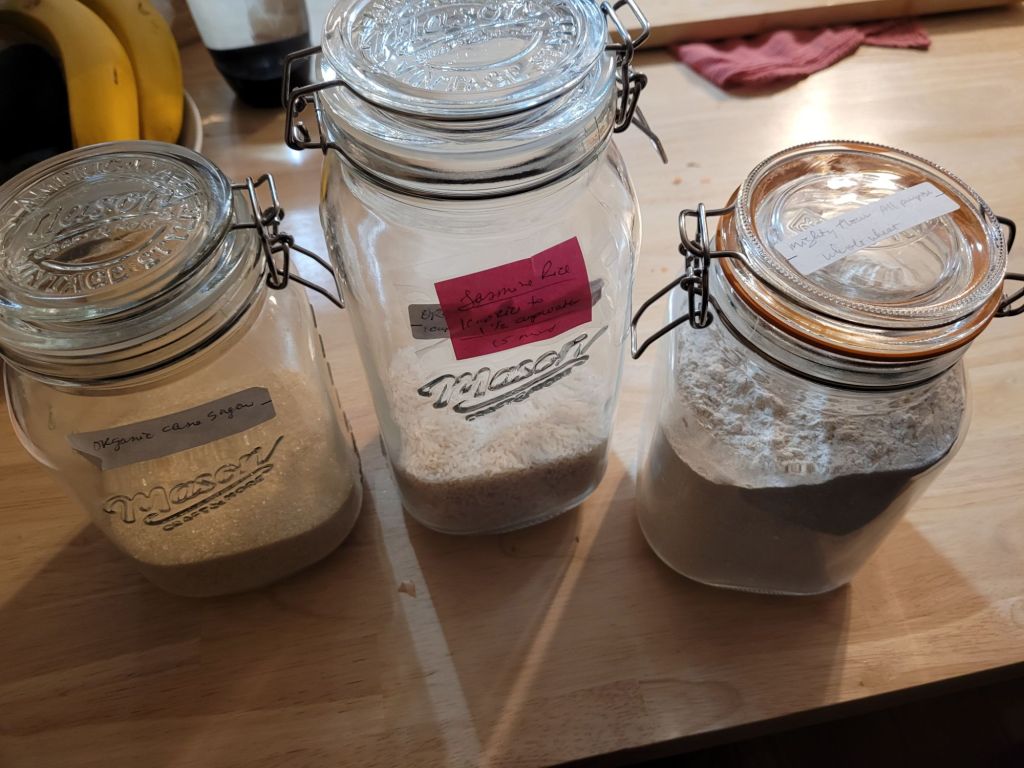
Storage containers and canisters should be changed out for glass. It’s healthier and looks good too.
A lot of food, even organic food, is sold in plastic. So, when you get home from the grocery store, spend time moving the food to glass storage, rather than leaving it in the original plastic.
Little steps. Let’s all take these little steps in the new year for our health, and for our families.
And what does it have to do with cancer, or therisk of cancer?
There have been many theories about how cancer originates in the body.
Dr. Thomas Seyfried of Boston College published the theory that cancer begins with chronic metabolic dysfunction — that is, mitochondria within a cell not being able to create good energy for a prolonged period of time — which causes them to begin creating energy through a fermentation process rather than through oxidative phosphorylation, often called OxPhos (Seyfried & Chinopoulos, 2021).
This is the key difference between healthy cells and cancerous cells: healthy cells use oxygen to create energy, while cancerous cells have reverted to an easier, ancient way to create energy (possibly from before Earth had a proper atmosphere) through fermentation of glucose (sugar) and an amino acid called glutamine.
This difference in mitochondrial function links all cancers together, regardless of which organ it appears within.
We have known this for a while. Did you know that PET scans, widely used to seek out and image cancerous activity in the body, are taken after a person ingests a sugary dye? The sugar (glucose) goes straight to the hungry cancer cells, carrying the dye that is visible to the scanner.
Why does mitochondrial dysfunction happen?
One reason why mitochondrial dysfunction happens is simply the presence of too much sugar and simple carbohydrates in a person’s diet.
These need very little digestive breakdown and go straight to the mitochondria as glucose molecules.
The mitochondria become overwhelmed with the amount of glucose they are being asked to process. They bog down and ask for help from the pancreas and insulin. They push the remaining glucose out into the blood as a sticky residue.
Have you ever felt tired, sluggish, and slow after a big meal or too many carbs? Food coma?? That is an indication that your cells are overwhelmed. You’re in a glucose storm, and your body is suffering.
This leftover glucose in the blood sticks to your hemoglobin, or red blood cells. This is the residue measured by a Hemoglobin A1C test.
My husband and son have to have their ice cream! I don’t join in (lactose issues, and it’s too sugary for my post-diagnosis diet)…
I tried to find a healthy ice cream brand using the Yuka app, but it seems that they just don’t exist.
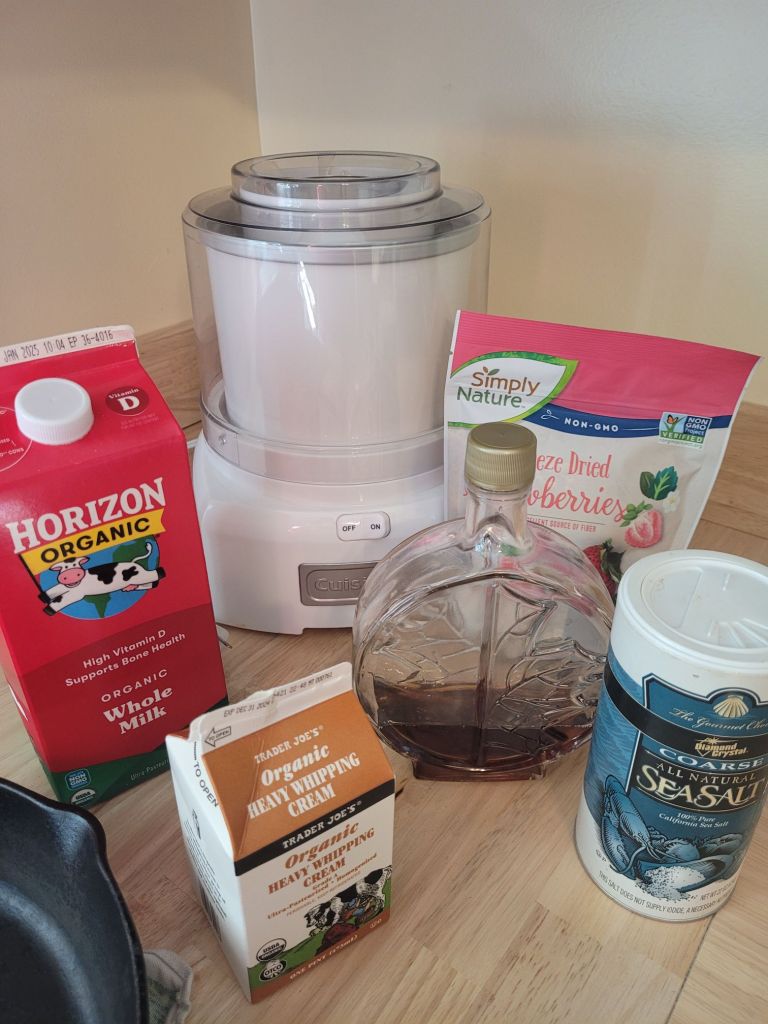
So, I decided to make it myself, using a little Cuisinart ice cream churn that our nephew gave us a few years ago.
Here’s the recipe:
One and a half cups (12 oz) organic heavy cream
One and a half cups (12 oz) organic whole milk
2/3 cup maple syrup
2 teaspoons vanilla extract
1/8 teaspoon sea salt
I usually add in some organic dried cherries, strawberries, blueberries, etc. from Trader Joe’s or Aldi. Let them soak in the unchurned mixture for a while in the fridge.
Halfway through the churning process, I sometimes also add a handful of chocolate chips.
Update: Last night, Jimmy said the only thing wrong with this ice cream is that it is too rich. I’m going to experiment with different ratios between the milk and cream to find the best way to do it. I’ll post updates.
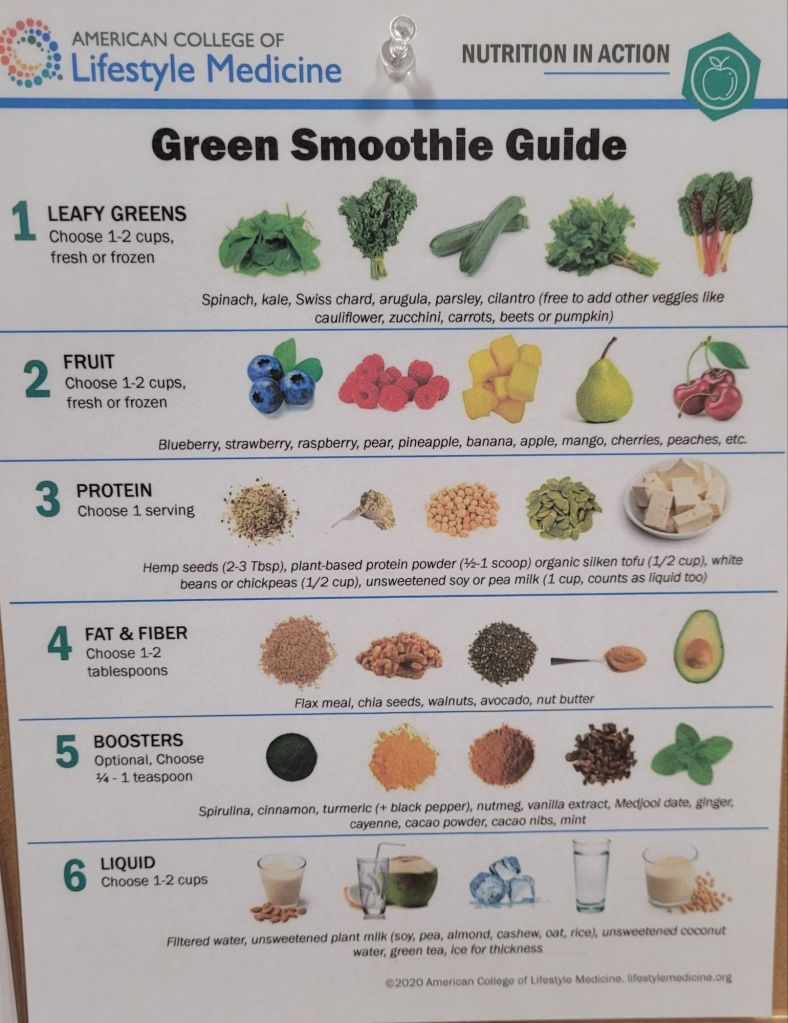
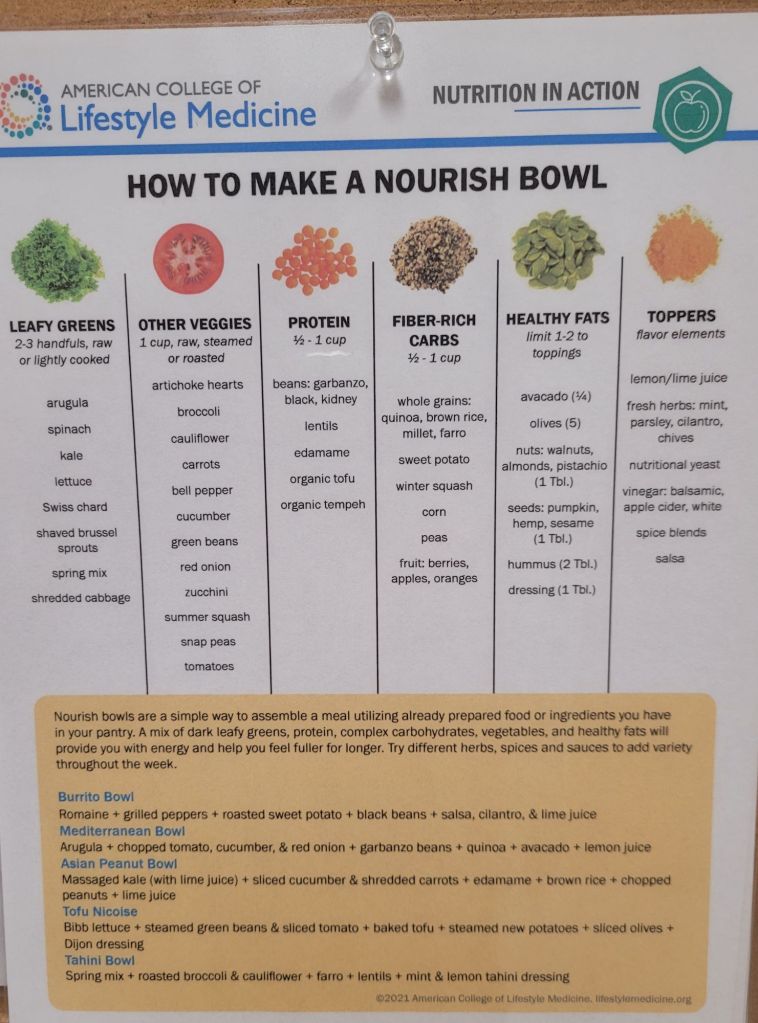
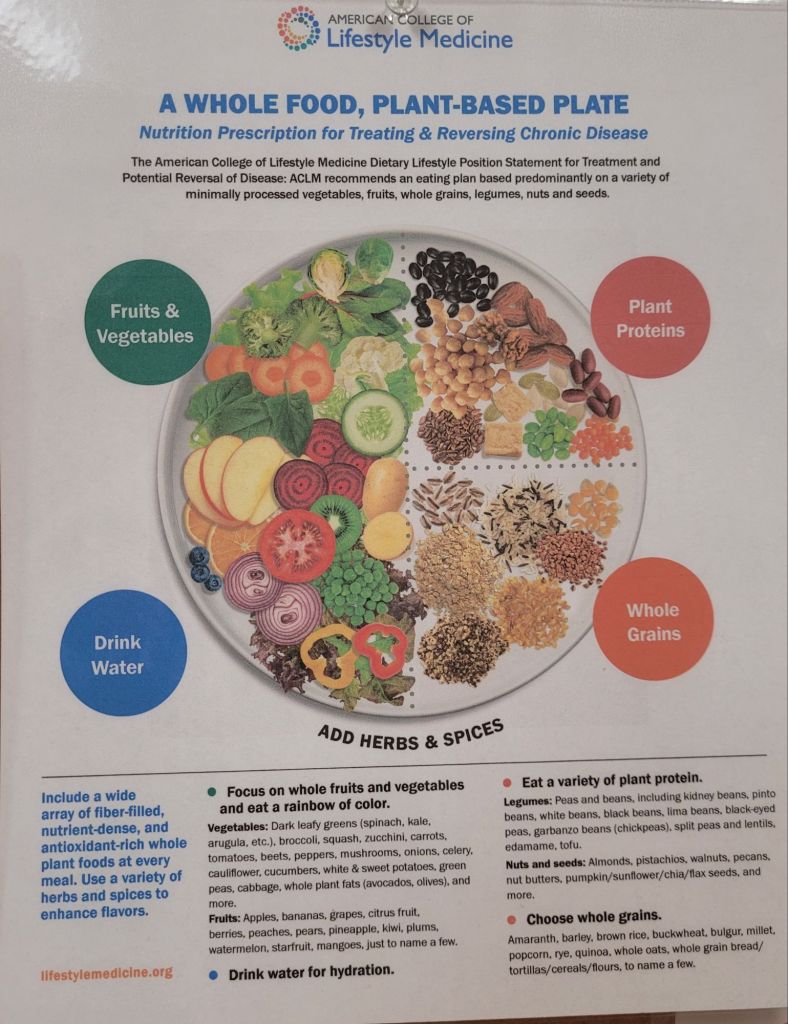
I had a checkup the other day and saw these on my doctor’s wall. How many times have you seen something like this?
There’s so much good info here. But prior to my diagnosis, I would have taken a little glance and not thought about it again. Now I’m pouring over them, matching this up with my own new patterns and habits.




 The Cancer Canary