This video is already three years old, but worth a watch:
The Warburg Effect is the basis of the research into the new(ish) theories around treating cancer as a metabolic disease, as well as much of the research on fasting and its benefits.
This video is already three years old, but worth a watch:
The Warburg Effect is the basis of the research into the new(ish) theories around treating cancer as a metabolic disease, as well as much of the research on fasting and its benefits.
Years ago, we caught a pledge week show on PBS about fasting. It was really interesting and surprising — not eating is healthy? Quite a paradigm shift from our day-to-day habits and culture.
My husband bought the book related to that program, read up, and eventually did a 3-day fast. He really liked how it made him feel better, sharpening his mind and jump-starting weight loss.
Fasting came back to mind when I got diagnosed. My husband and my best friend were immediately suggesting it, too.
Between my first meeting with my cancer hematologist and my second meeting, I greatly changed my diet and also did 3 fasts: one after the holidays, one for a colonoscopy, and one when my husband had his colonoscopy.
Looking at my bloodwork from those 2 appointments, there WAS a decrease in my markers. Plus, I felt better and had more energy.
Here is a great introduction to the power of fasting with Dr. Pradip Jamnadas.
This book is amazing as well. Both are long but worth it.
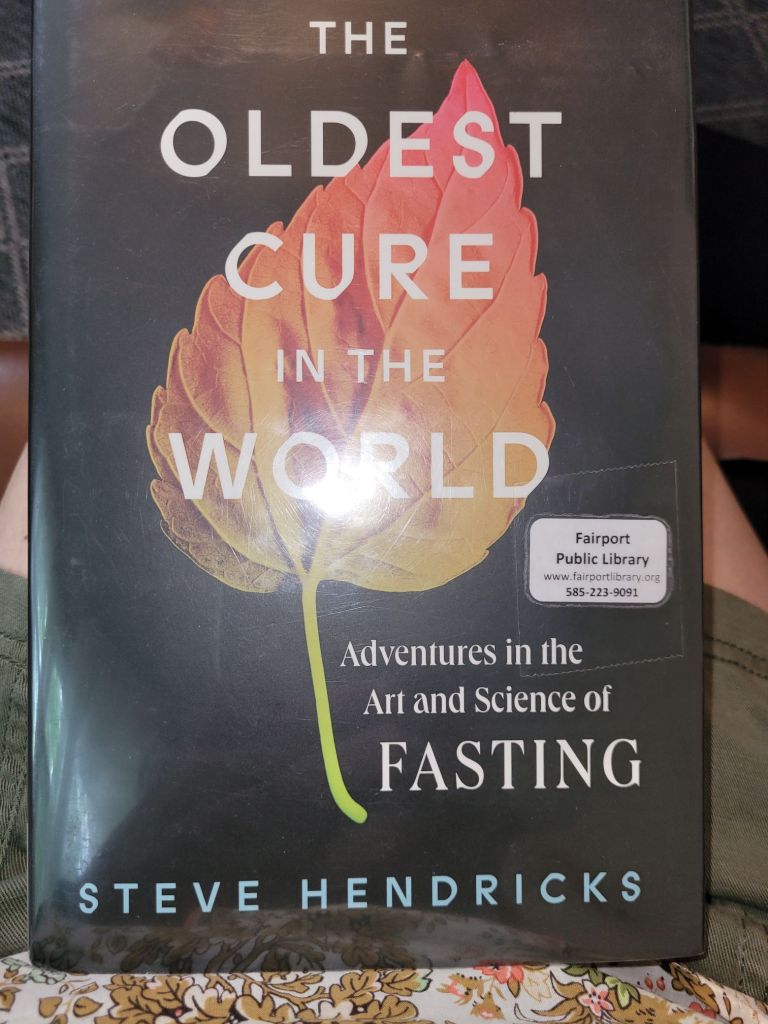
Since then, I’ve learned a ton about fasting, intermittent fasting, meal timing, nutrition, and metabolic health. And it’s exciting to see fasting being talked about by some very cutting-edge researchers and physicians.
 The Cancer Canary