Toxic Tagalongs

I hate to be a Debbie Downer, but apparently tea bags are coated in a type of plastic or teflon, which is then heated in the boiling tea water and then goes into our bodies and stays, for years. Ugh. ๐Ÿ˜ตโ€๐Ÿ’ซ๐Ÿ˜ต

This is one more source of microplastics that are unfortunately accumulating in our bodies and especially our brains. ๐Ÿง  So last week, I started doing things a little differently.

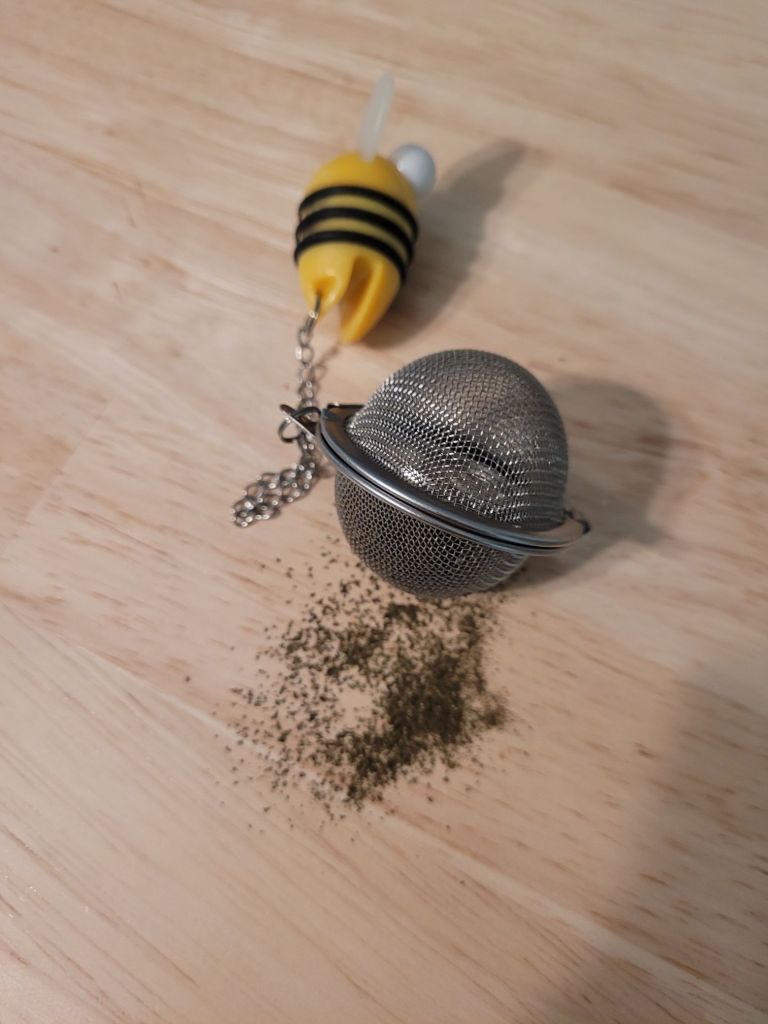
I do have a couple of mesh tea balls, which can hold the contents of a tea bag or loose tea. Generally, the holes are a little too big, and the tea particles go rogue. And to be honest, I have no idea what metal they are made of…
Losing half the tea!

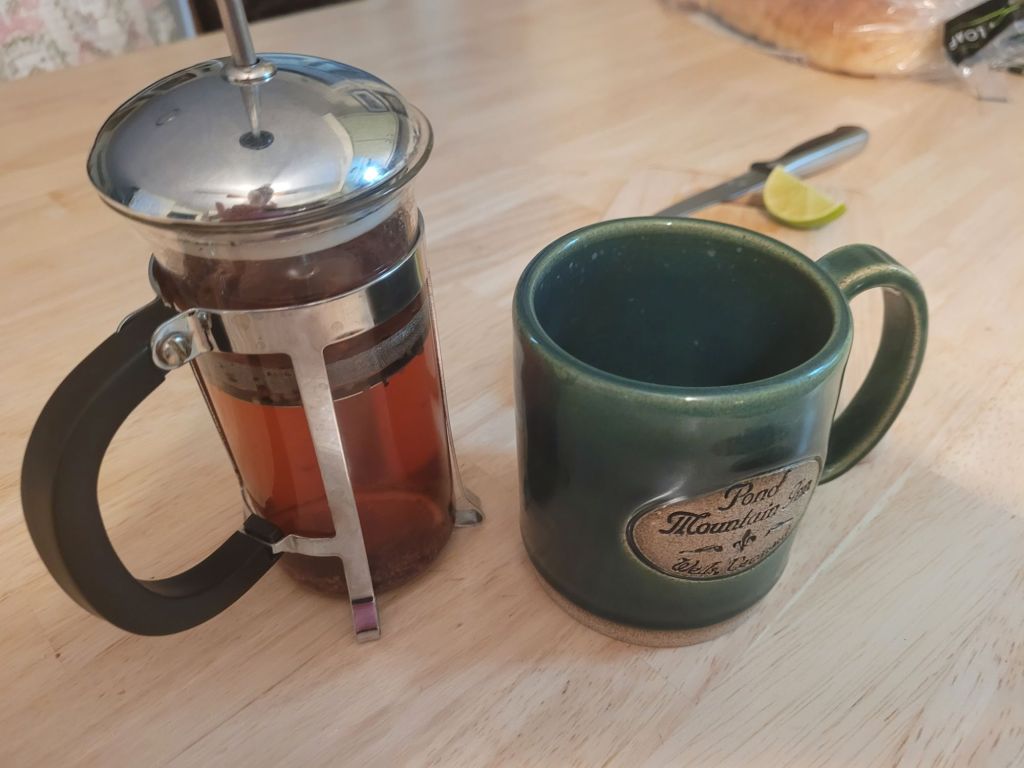
I used a French press to make tea last week, and it worked pretty well. However, some little bits of tea found their way into my mug and then my teeth. Not a big deal… I did like putting lime slices into the press along with my hibiscus tea and pressing them together.

Then my husband found this cool little gadget on Amazon. The holes are crazy tiny and its made from stainless steel:
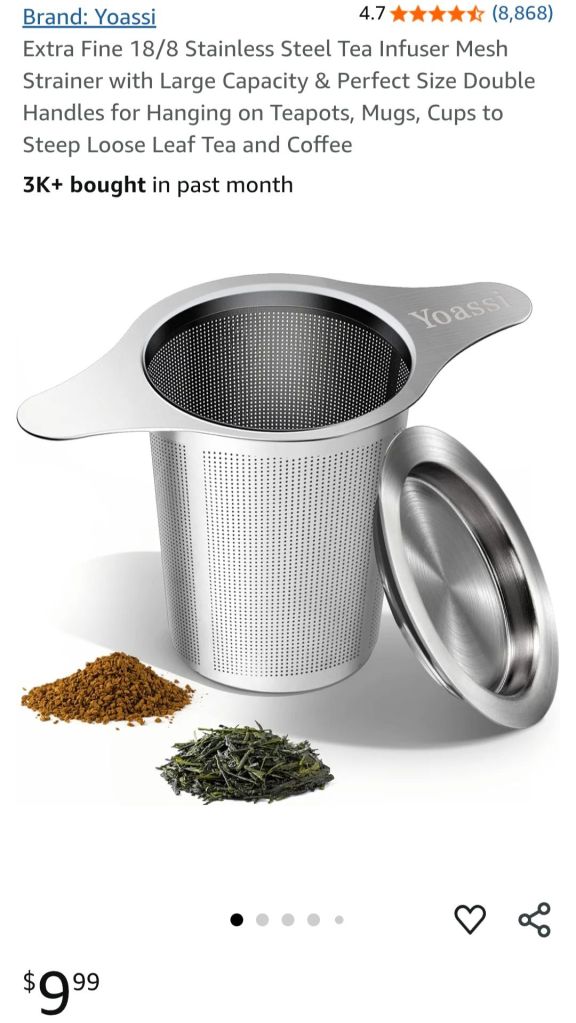
You empty the tea bag or put loose tea into the cup, put the little cup inside an empty mug, and pour the hot water into/through it. Then, put on the little cap on while your tea steeps.

After a minute or two of steep time, you can use the cap as a coaster when you take it out of the mug.


P.S. Doctor Li talks about microplastics in the video interview I posted recently.

Here’s more research on it: https://pubmed.ncbi.nlm.nih.gov/31552738/

Morning Routine

I recently spoke with an old friend who had heard of my diagnosis through the grapevine. He asked if I was doing all the thingsall the things a person does when they get a diagnosis like this. Yes, I replied.

But what are the things? Well, there’s a lot of ’em, so I’m breaking them down by the phase of a typical day.

Here’s Part 1: Morning Routine.


I’ve wavered in consistency lately in terms of my morning routine. Months of extra-snowy and cold winter, plus traveling & staying with family are just a couple of the reasons why. There’s also “couch inertia,” aka “warm blanket in front of the fire,” inertia.

Yeah, its a thing.

It’s just a little snow… no biggie.

Here’s the morning routine I strive for (and often achieve):

  • Wake up between 6 and 7 am. I don’t use an alarm but seem to always wake up around this time.
  • Put on my dumb watch, which counts my steps and tells the time, but isn’t constantly sending updates to my phone.
  • Open the blinds & get a blast of natural light into the bedroom.
  • Brew some organic coffee, which I drink black.
  • Use filtered water, of course.
  • I add about a tablespoon of chaga to my coffee. Chaga is a mushroom product that has some really great health benefits.
  • A quick walk outside, usually my backyard. Put bare feet on the earth. This is called grounding, and there’s a wonderful documentary on YouTube called The Earthing Movie… check it out.
  • While I’m outside, I like to break pine needles and smell them. I feel that it wakes up a different part of my brain. In the summer, we have other aromatics like rosemary, basil, and lemon balm to choose from. But in winter, it’s pine.
  • Set my circadian rhythm by looking at the sun. We have mostly hazy sun here, and if you live in a very sunny place, this would be impossible. Still, our stomachs set their expectations based on this morning exposure to the sun. Read about it in the book The Oldest Cure in the World by Steve Hendricks.
  • I started doing this morning activation routine with Master Shi Heng Yi, and it was a great starting point. However, over time, I’ve added reps and hand weights and a few more exercises to make it a more challenging routine.
  • A shower with only yuka-approved soap, shampoo, and conditioner.
  • While showering, I do a lymphatic massage. This is based on lots of reading and videos by lymphatic specialists. A great resource is the Lymph Love Club, which you can follow on social media for lots of reminders and techniques. (Note: CLL is not only considered leukemia but also a form of Non-Hodgkin Lymphoma, so taking care of that system is important for me, especially to balance out my sedentary work.)
  • A cold blast at the end of the shower, based on the research of Wim Hof.
  • Out of the shower, I get dressed, walk the dog, and do chores — or hit the rebounder — with a goal of getting 2500 steps before settling down to my desk at 8:45 am.

Ok, that’s it for the wake-up routine. Tune in next time… ๐Ÿ“ป


Like Your Life Depends On It

I’ve written before about the need to filter your water. Every time I look at the news, there’s a new reason to do so. If it’s not the herbicides and pesticides, it’s the PFAS and forever chemicals, it’s other people’s pharmaceuticals that can’t be filtered out ๐Ÿ˜ฆ, it’s contamination from industrial areas, it’s… just a really long list that keeps growing.

So yes, filter your water … like your life depends on it … because it does.

This video is a great explanation of PFAS and related risks and also covers types of filters and filtration systems.

This YouTuber is a great source of inspiration, especially during spring cleaning, as she knows her stuff about household contaminants and hidden sources of toxins. Check her out!

Full House Filtration

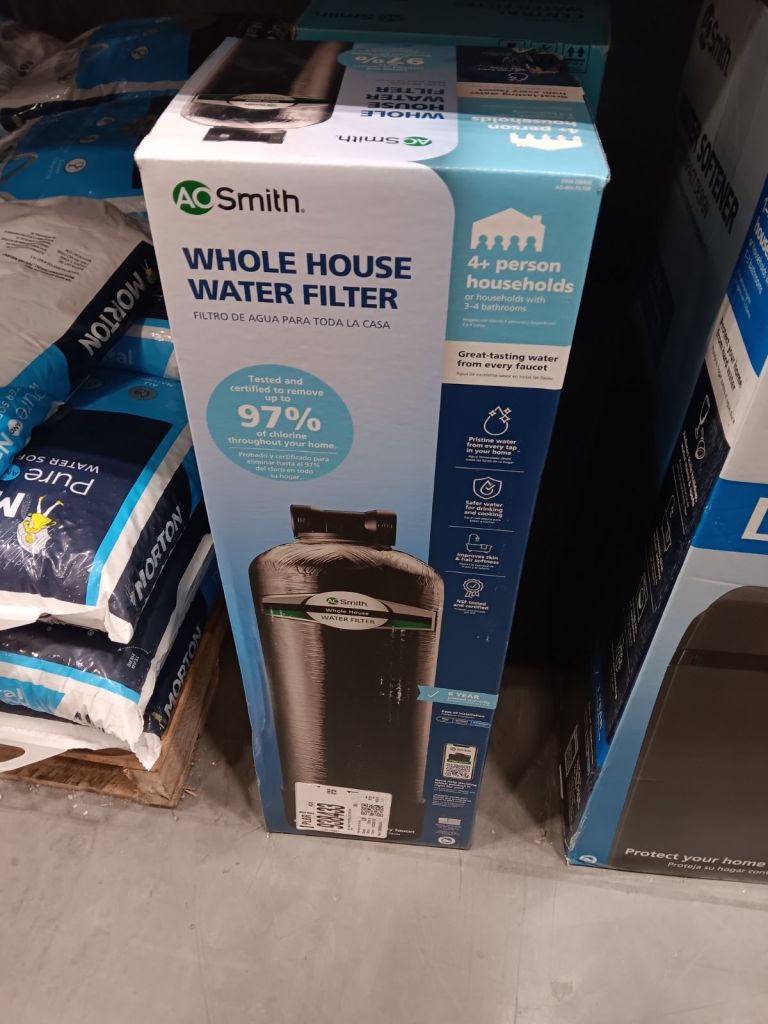
Looked into various water filters today at Lowe’s. Found the small ones for one single faucet, but also found this whole home system for $339.

Ok, that’s more expensive than the single faucet systems, and it would need to be installed between the main water line and the hot water heater by a professional, which could cost a bit, BUT it filters for the entire house. And you change the charcoal only once for each 6 years (assuming a 4-person household).

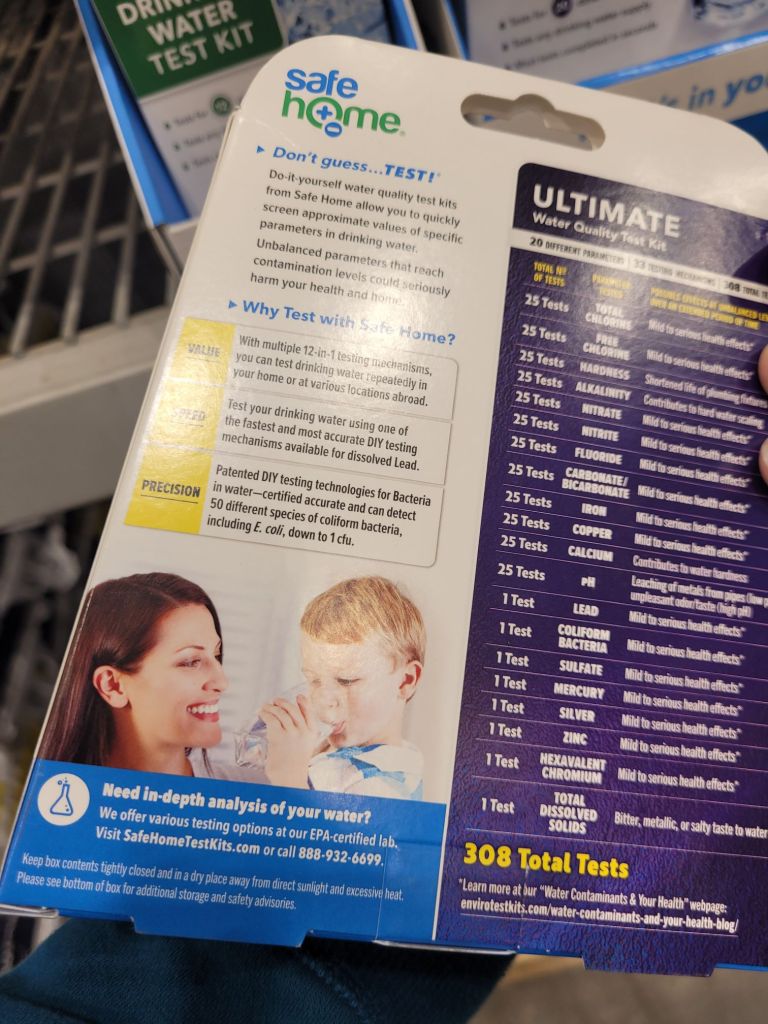
Lowe’s also has some DIY water testing kits. Though neither the basic kit ($13) nor the ultimate kit ($29) includes a test for glyphosate, it does cover quite a few other types of chemicals and contaminants.

I like these tests because you don’t send them off to the lab. You actually just get the results immediately using a litmus-type strip.

Filter Your Water

One of the first things we did was filter our tap water in the kitchen. We had one for the refrigerator but had gotten off schedule with filter replacements. This is a great first line defense you can do to remove toxins from your system.

Best Practices

โ— Filter your water.

โ— Set up calendar reminders on your phone so you don’t forget to change the filter regularly.

โ— Buy the replacement filters in a multi-pack so you can change them with no delay.

The Deets

We used the Pur system, which attaches to the faucet and gets in the way 98% of the time.

It had good ratings, and we purchased through Amazon.

The Drawbacks

The filters that attach to the faucet will slow the flow of water, which is a pain when you’re trying to fill a large pot to boil pasta. We are looking at under-mount systems right now, though they have their own drawbacks (under sink leaks, hard to change filter without contortionist moves).

I’ll update as we learn more.