
Was using my salt and pepper grinders today and realized that they BOTH have plastic grinding gears … yet another way for microplastics (or not-so-micro-plastics) to break off, get into our food, and then be consumed.
I’m throwing them out!!
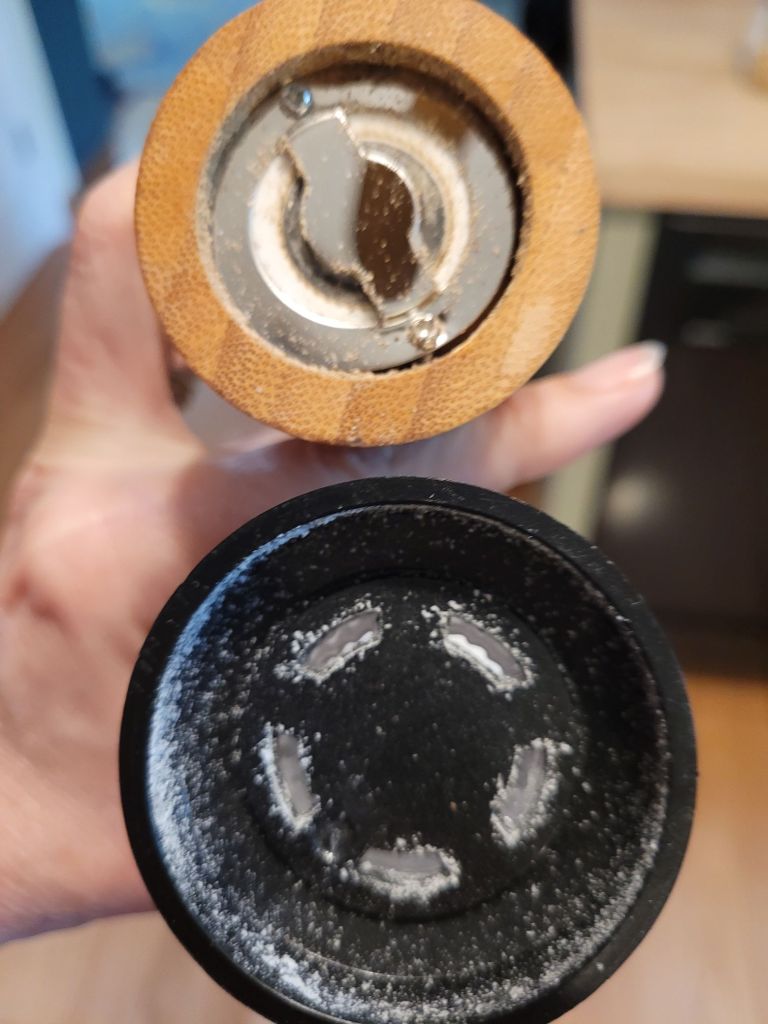
Was using my salt and pepper grinders today and realized that they BOTH have plastic grinding gears … yet another way for microplastics (or not-so-micro-plastics) to break off, get into our food, and then be consumed.
I’m throwing them out!!
A few years ago, my son wanted to get me a Mother’s Day gift I would use… so he asked what I wanted, and I said an egg pan that was not Teflon coated but didn’t take all day to clean.
Tall order, I thought.
He got me two non-stick granite pans made by Michaelangelo. They looked good and worked great and I was really pleased.
Time has passed, and the surfaces have gotten fuzzy from repeated cleaning… and they’ve been pushed to the back of the cabinet as we have used the cast irons more and more.
But I wonder… what are granite pans made of anyway?
I Googled around and found that they are “not actually made of granite stone, but named for its resemblance to the texture.”
Okay, but what are the pans made of?
Seems there are 2 kinds: Teflon (PTFE) and vitreous enamel.
For both types, it is recommended that you use soft utensils when cooking and wash them carefully to avoid scratches or pitting.
The Michaelangelo website sells these pans labelled as “100% Toxic-Free — Free of PFAS, PFOA, lead and cadmium.” I sure hope that is true!
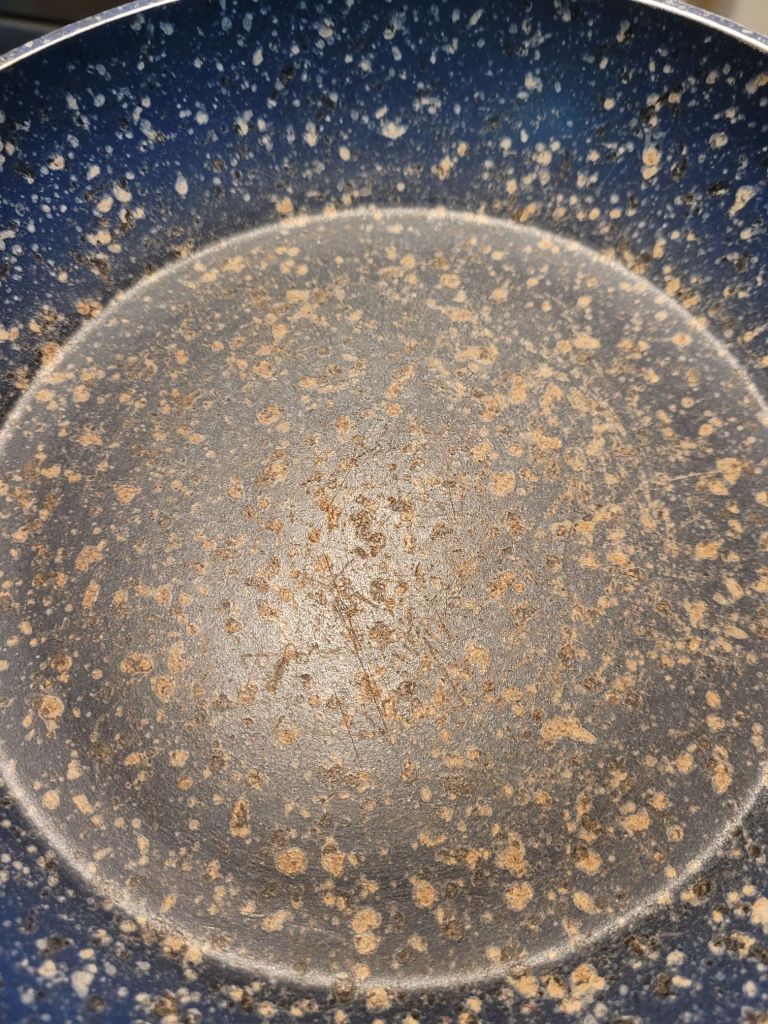
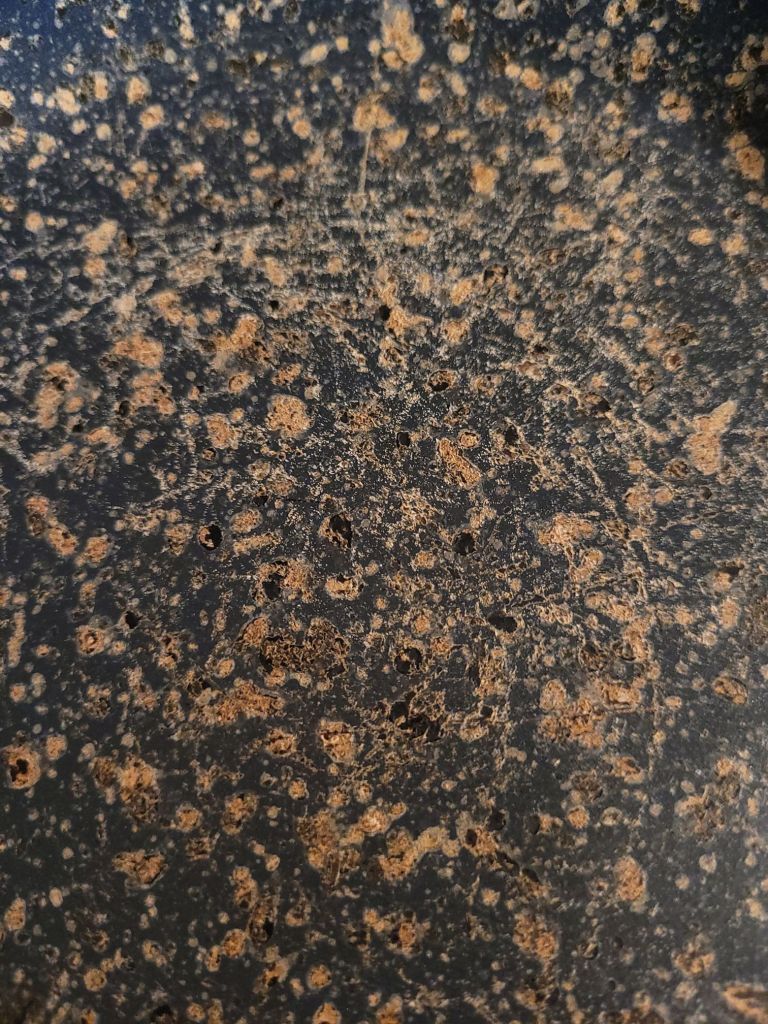
Anyway, these are too scratched up. Throwing them away!
I hate to be a Debbie Downer, but apparently tea bags are coated in a type of plastic or teflon, which is then heated in the boiling tea water and then goes into our bodies and stays, for years. Ugh. 😵💫😵
This is one more source of microplastics that are unfortunately accumulating in our bodies and especially our brains. 🧠 So last week, I started doing things a little differently.
I do have a couple of mesh tea balls, which can hold the contents of a tea bag or loose tea. Generally, the holes are a little too big, and the tea particles go rogue. And to be honest, I have no idea what metal they are made of…
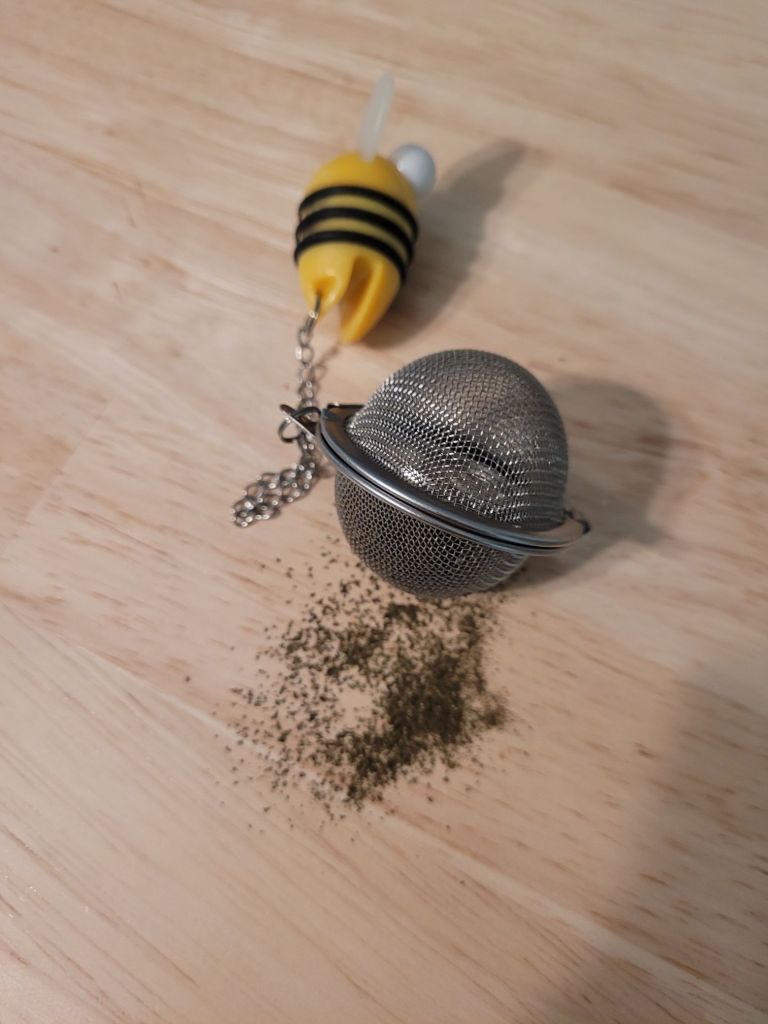
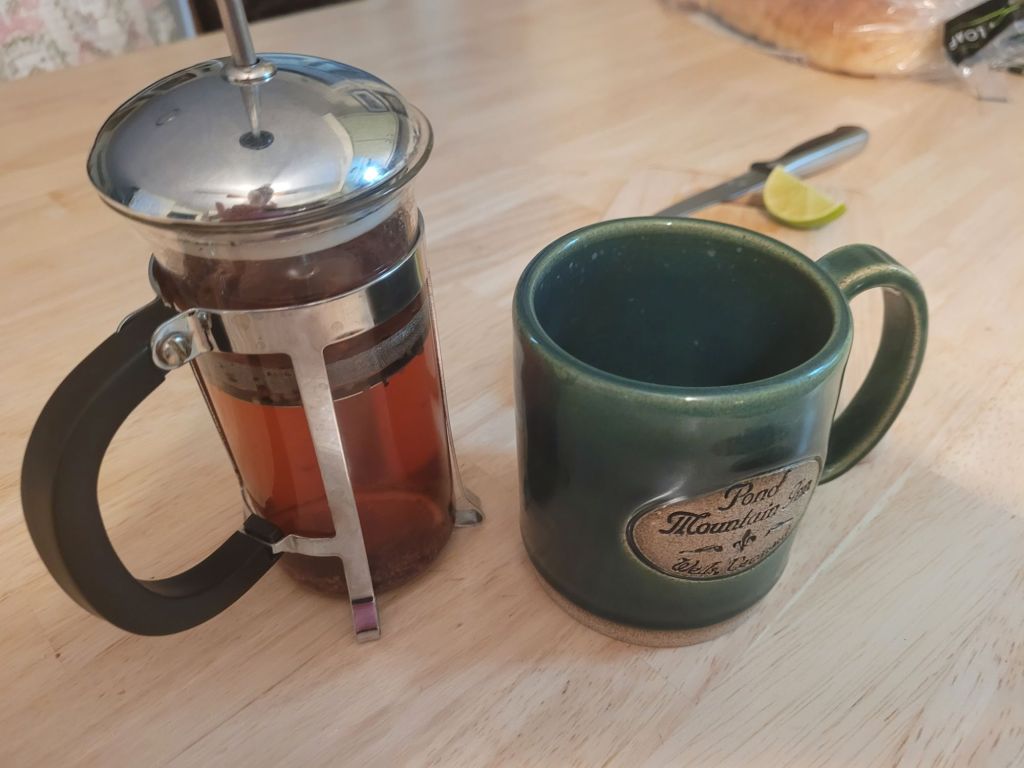
I used a French press to make tea last week, and it worked pretty well. However, some little bits of tea found their way into my mug and then my teeth. Not a big deal… I did like putting lime slices into the press along with my hibiscus tea and pressing them together.
Then my husband found this cool little gadget on Amazon. The holes are crazy tiny and its made from stainless steel:
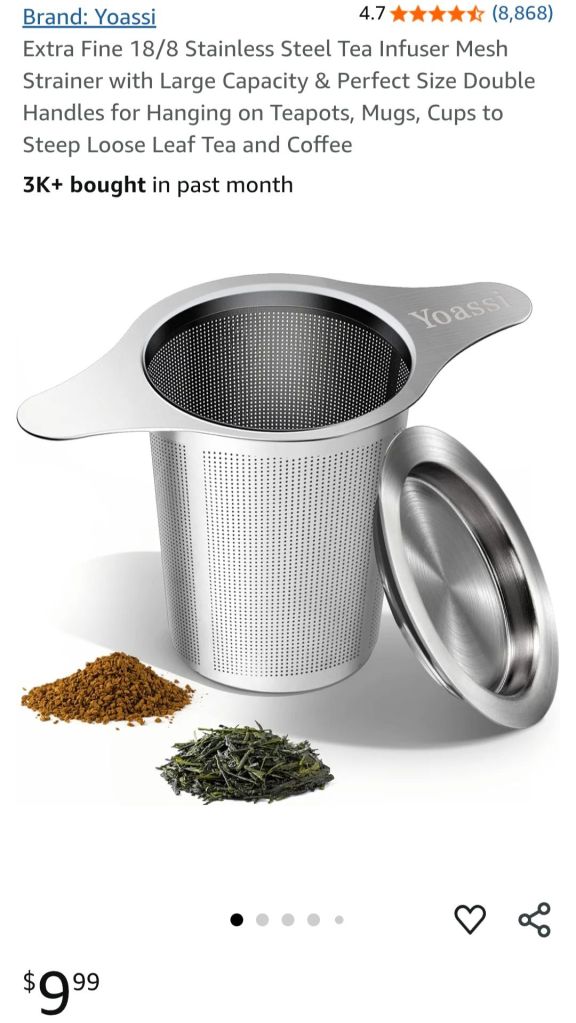
You empty the tea bag or put loose tea into the cup, put the little cup inside an empty mug, and pour the hot water into/through it. Then, put on the little cap on while your tea steeps.
After a minute or two of steep time, you can use the cap as a coaster when you take it out of the mug.
P.S. Doctor Li talks about microplastics in the video interview I posted recently.
Here’s more research on it: https://pubmed.ncbi.nlm.nih.gov/31552738/
I’ve written before about the need to filter your water. Every time I look at the news, there’s a new reason to do so. If it’s not the herbicides and pesticides, it’s the PFAS and forever chemicals, it’s other people’s pharmaceuticals that can’t be filtered out 😦, it’s contamination from industrial areas, it’s… just a really long list that keeps growing.
So yes, filter your water … like your life depends on it … because it does.
This video is a great explanation of PFAS and related risks and also covers types of filters and filtration systems.
This YouTuber is a great source of inspiration, especially during spring cleaning, as she knows her stuff about household contaminants and hidden sources of toxins. Check her out!
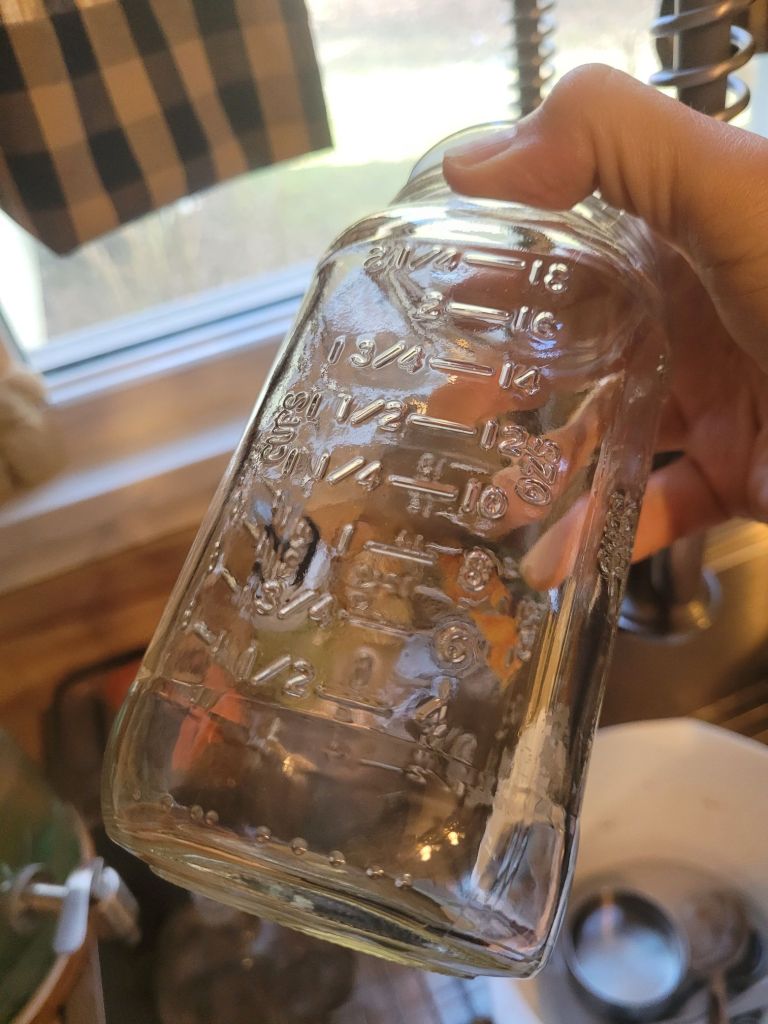
Each time I save a good jar from the recycling bin, I feel a little closer to my elders who went through the depression. I remember those comments… Hey, don’t throw that out. That’s a good jar!
I love how the cabinets and spice rack have changed since I started detoxing my home. Bye bye, plastic! Hello glass, steel & sustainability!
How about you?
Found a couple of videos from Dr. Rhonda Patrick to illuminate the problems with and sources of microplastic exposure.
These are long but very worthwhile.
Warning: These are “Eye of Sauron” videos that may overwhelm you. Take breaks! I had to…
Takeaways:
Explore her videos for more info on health and microplastics… including how to hasten their excretion from the body. Hint: sulforaphane, fibrous diet, etc.
 The Cancer Canary