Great Resources

Stumbled across some great resources lately and I wanted to share them here. Thse were all serendipitous…

This doctor has a YouTube channel and provides very down-to-earth advice on how to stay healthy and avoid cancer. Check her out!


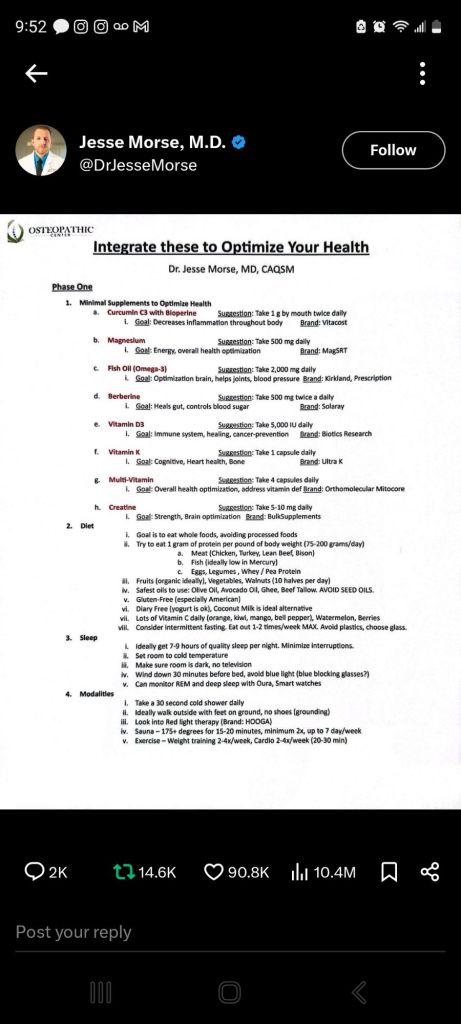
This doctor popped up in my Twitter feed, and I don’t know much about him, but WOW, I wish my doctor was handing out a sheet like this to his patients, including the healthy ones.

I have already incorporated a lot of these into my daily/weekly routines over the last year, and it’s great to have those ideas reinforced by a doctor.

The “seek” button on my car radio pulled up this radio show/podcast, which looks interesting. I happened upon their report of the Dirty Dozen and the Clean Fifteen:

https://loe.org/shows/segments.html?programID=25-P13-00004&segmentID=4
Microplastics, pt 2

Found a couple of videos from Dr. Rhonda Patrick to illuminate the problems with and sources of microplastic exposure.

These are long but very worthwhile.

Warning: These are “Eye of Sauron” videos that may overwhelm you. Take breaks! I had to…

Takeaways:

  • Be cautious with your children’s clothing as they are still in development. Avoid polyester and rayon as they do shed micro- and nanoparticles of plastic.
  • Avoid using “moisture wicking” fabrics, especially because they are generally worn when exercising and, therefore, are heating up and stretching, which hastens the breakdown of the fabric.
  • Avoid drinking from plastic water bottles if possible. Be aware that some single-serve metal water bottles will have plastic lining. But of course, drink from these if they’re your only choice.
  • In the kitchen, avoid heating anything made or lined with plastic. That means avoid microwaving or even washing in high temperatures. It’s best to just throw these away and replace them with glass.
  • Avoid situations where vinegars or acidic fruits are used in plastic (to-go salads, etc.) as the vinegar/acid will work the same as heat to break down the plastic and release chemicals.
  • Microwave popcorn bags are lined in BPA, and that is released in the microwave. Avoid!!
  • Aluminum cans are also lined with BPAs, which are forever chemicals, which take years to leave your body.
  • Avoid getting any hot beverage in a to-go cup (plastic-lined). Because these are cheap and flexible, the BPA is released quickly when hot coffee or tea is put in. Carry a reusable mug and ask the barista to use it directly.
  • Throw out any non-stick cooking pans and replace with steel or cast iron.
  • Silicon baking materials are not to be used or trusted.

Explore her videos for more info on health and microplastics… including how to hasten their excretion from the body. Hint: sulforaphane, fibrous diet, etc.

Sulforaphane

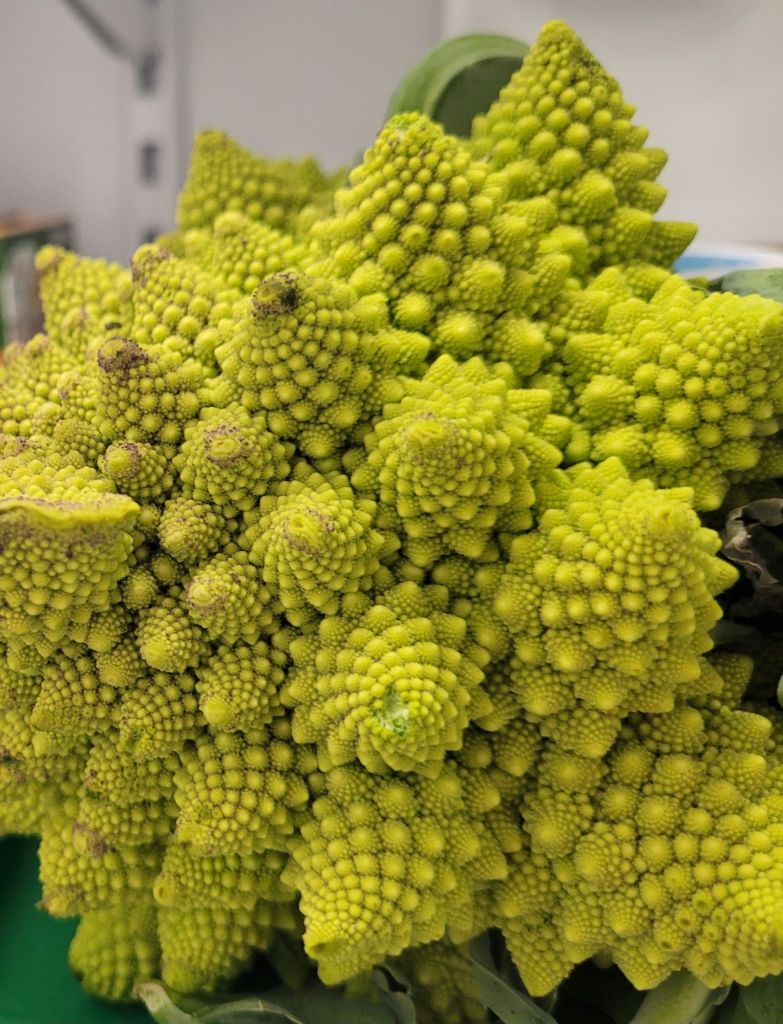
Isn’t it beautiful? Look at those Fibonacci swirls! 🤩

Sulforaphane is a phytonutrient compound found in cruciferous vegetables. Regular consumption is connected with an overall lower risk of cancer, and many studies show that it fights active cancer, too.

Here’s a quick list of cruciferous veggies:

  • Broccoli
  • Brussels sprouts
  • Cabbage
  • Cauliflower
  • Collard greens
  • Bok choy
  • Kale
  • Radish
  • Romanesco broccoli, pictured above
  • Watercress
  • Wasabi

The food that has the most sulforaphane is actually the broccoli SPROUT, which are  delicious in a salad. The sprouts can have 10 to 100 times the amount of sulforaphane than the mature vegetable.

I’ve definitely upped my intake this year, and I’m regularly eating sprouts & microgreens now.

Here are some interesting videos if you want to learn more. Dr. Eric Berg below points out that it has been studied a lot, more than 35 times.

In the video below, Dr. Moss shares that this research is very controversial, because most  chemotherapy drugs do not kill cancer stem cells, but this common, inexpensive vegetable DOES.

Learn more about these veggies: https://www.gardeningknowhow.com/edible/vegetables/vgen/cruciferous-vegetables.htm