You need to sweat. Every day. Sweat cleans out your systems and allows toxins to leave your body.
I live in a cold place, and sweat is hard to come by for about half the year. So once a month or so, I treat myself to a 30-minute sauna.
It feels wonderful.
I usually have to take a break halfway through, just open the door and let some heat out and room-temp air in.
The place I go to has private rooms, some quite large to accommodate multiple people or a wheelchair or walker.
There are also rooms with cold plunge tubs. I haven’t tried that yet. 🥶
A really nice feature of this sauna studio is that they give you a cold towel with a menthol/camphor oil in it to wipe down as you sweat. So refreshing!
The first time I went to the sauna, my daughter came with me, and we couldn’t get over how similar it was to driving in our old Subaru.
When we lived in Florida, we would sweat every day, whether we wanted to or not.
The Subaru had black leather interior. It would bake in the driveway or a parking lot… we’d need to drive somewhere, open the door and see heat and humidity rising visibly like vapors off a barbecue grill.
I recently spoke with an old friend who had heard of my diagnosis through the grapevine. He asked if I was doing all the things… all the things a person does when they get a diagnosis like this. Yes, I replied.
But what are the things? Well, there’s a lot of ’em, so I’m breaking them down by the phase of a typical day.
Here’s Part 1: Morning Routine.
I’ve wavered in consistency lately in terms of my morning routine. Months of extra-snowy and cold winter, plus traveling & staying with family are just a couple of the reasons why. There’s also “couch inertia,” aka “warm blanket in front of the fire,” inertia.
Yeah, its a thing.
It’s just a little snow… no biggie.
Here’s the morning routine I strive for (and often achieve):
Wake up between 6 and 7 am. I don’t use an alarm but seem to always wake up around this time.
Put on my dumb watch, which counts my steps and tells the time, but isn’t constantly sending updates to my phone.
Open the blinds & get a blast of natural light into the bedroom.
I add about a tablespoon of chaga to my coffee. Chaga is a mushroom product that has some really great health benefits.
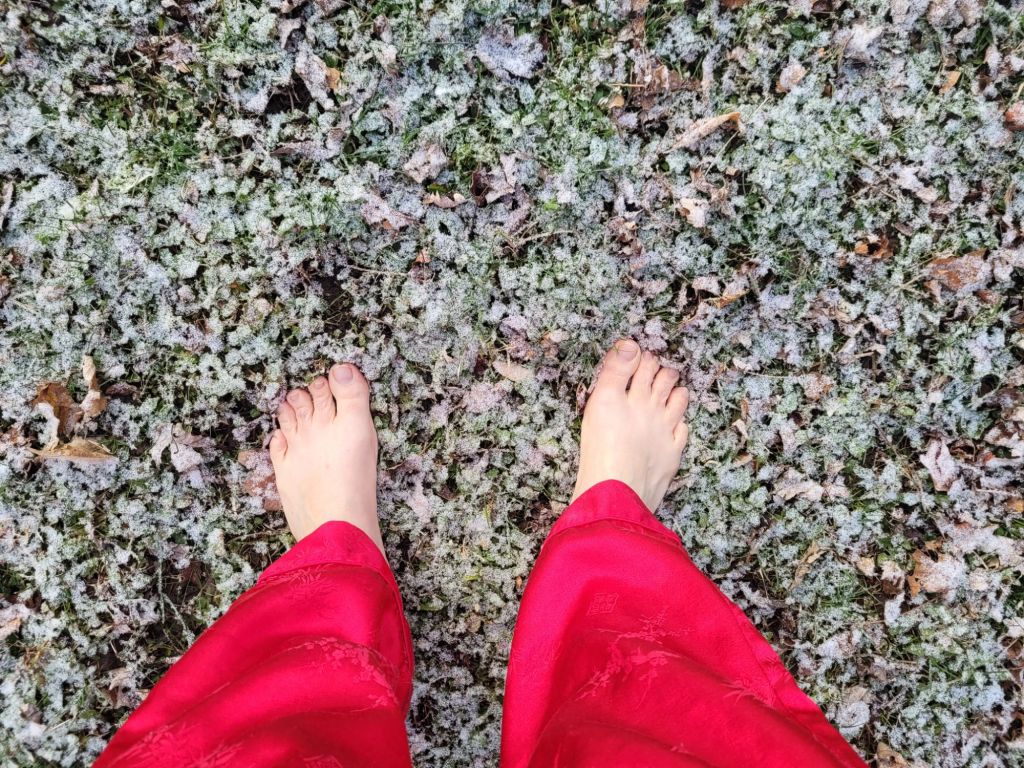
A quick walk outside, usually my backyard. Put bare feet on the earth. This is called grounding, and there’s a wonderful documentary on YouTube called The Earthing Movie… check it out.
While I’m outside, I like to break pine needles and smell them. I feel that it wakes up a different part of my brain. In the summer, we have other aromatics like rosemary, basil, and lemon balm to choose from. But in winter, it’s pine.
Set my circadian rhythm by looking at the sun. We have mostly hazy sun here, and if you live in a very sunny place, this would be impossible. Still, our stomachs set their expectations based on this morning exposure to the sun. Read about it in the book The Oldest Cure in the World by Steve Hendricks.
I started doing this morning activation routine with Master Shi Heng Yi, and it was a great starting point. However, over time, I’ve added reps and hand weights and a few more exercises to make it a more challenging routine.
A shower with only yuka-approved soap, shampoo, and conditioner.
While showering, I do a lymphatic massage. This is based on lots of reading and videos by lymphatic specialists. A great resource is the Lymph Love Club, which you can follow on social media for lots of reminders and techniques. (Note: CLL is not only considered leukemia but also a form of Non-Hodgkin Lymphoma, so taking care of that system is important for me, especially to balance out my sedentary work.)
A cold blast at the end of the shower, based on the research of Wim Hof.
Out of the shower, I get dressed, walk the dog, and do chores — or hit the rebounder — with a goal of getting 2500 steps before settling down to my desk at 8:45 am.
Ok, that’s it for the wake-up routine. Tune in next time… 📻
I’ve written before about the need to filter your water. Every time I look at the news, there’s a new reason to do so. If it’s not the herbicides and pesticides, it’s the PFAS and forever chemicals, it’s other people’s pharmaceuticals that can’t be filtered out 😦, it’s contamination from industrial areas, it’s… just a really long list that keeps growing.
So yes, filter your water … like your life depends on it … because it does.
This video is a great explanation of PFAS and related risks and also covers types of filters and filtration systems.
This YouTuber is a great source of inspiration, especially during spring cleaning, as she knows her stuff about household contaminants and hidden sources of toxins. Check her out!
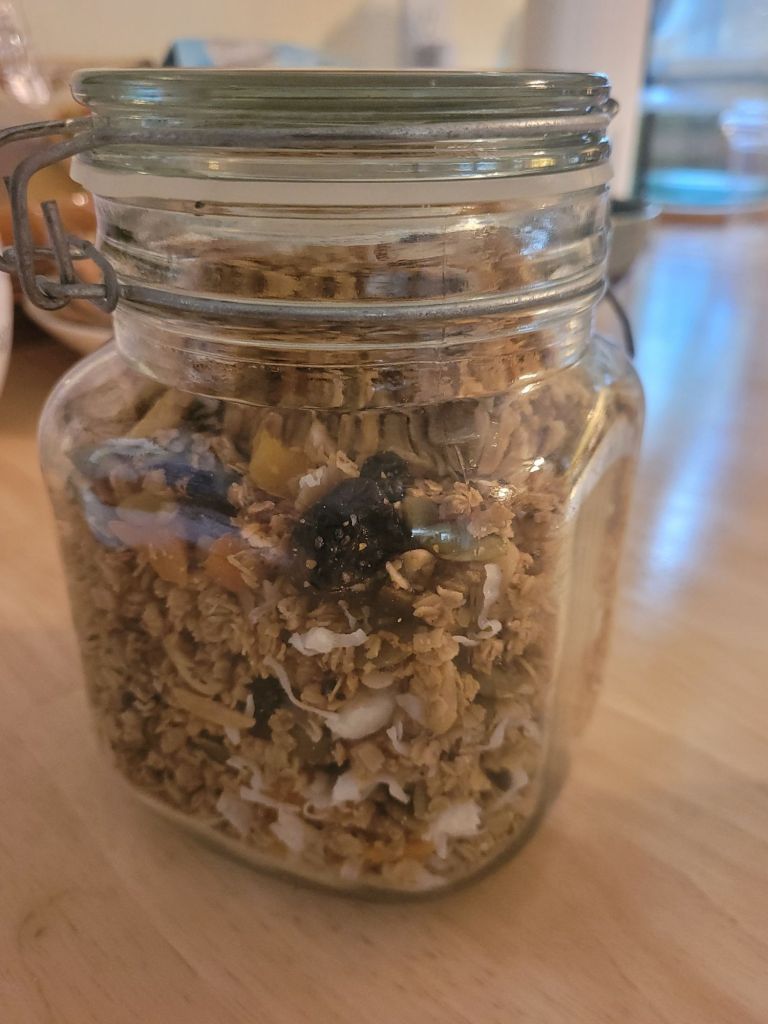
The house smells wonderful this morning as I’ve made a batch of homemade granola. It’s delicious and also good to know all the ingredients are whole foods from sources I’ve scrutinized myself.
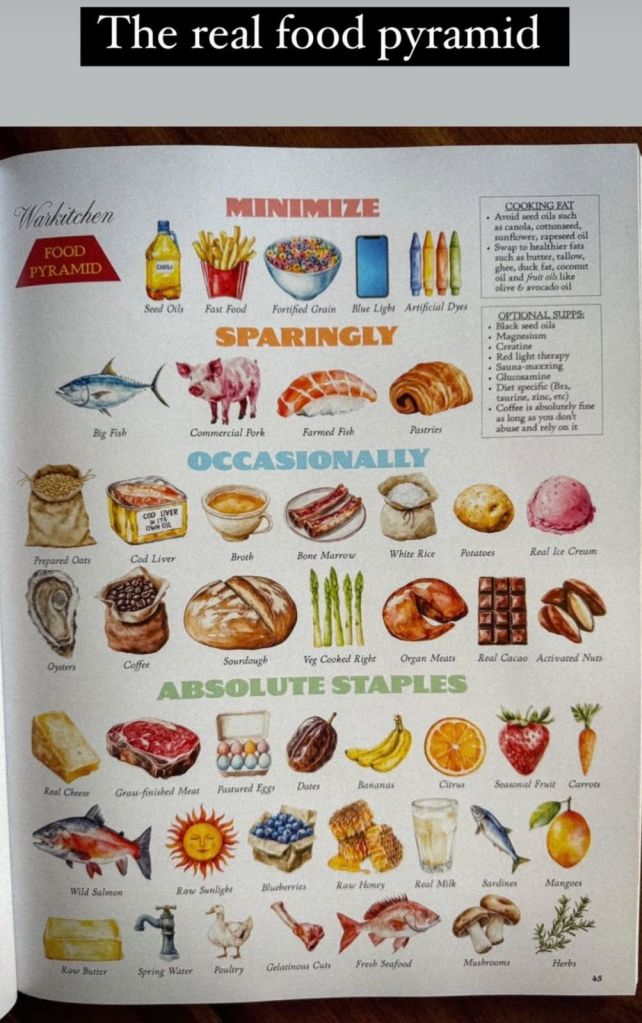
Including the chia and flax seeds is a way to add Omega-3s into my diet. Using coconut oil helps reduce my Omega-6 load because even organic granola includes seed oils.
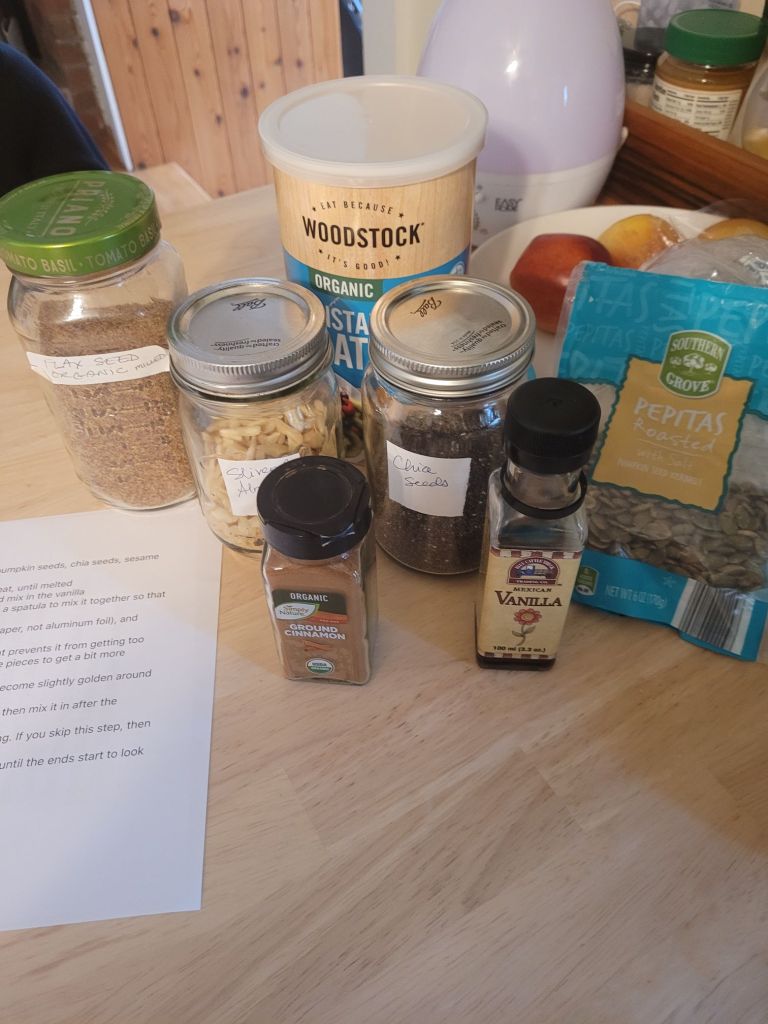
Im using a recipe titled “Maple and Chia Seed Granola” by Maria Provenzano, changed a bit based on what we had in the cupboard:
4 cups old fashioned oats
½ cup slivered almonds
¾ cup pumpkin seeds
2 tablespoons chia seeds
2 tablespoons ground flax seeds
1 tablespoon sesame seeds
1 teaspoon cinnamon
½ teaspoon salt
½ cup pure maple syrup
1 teaspoon vanilla
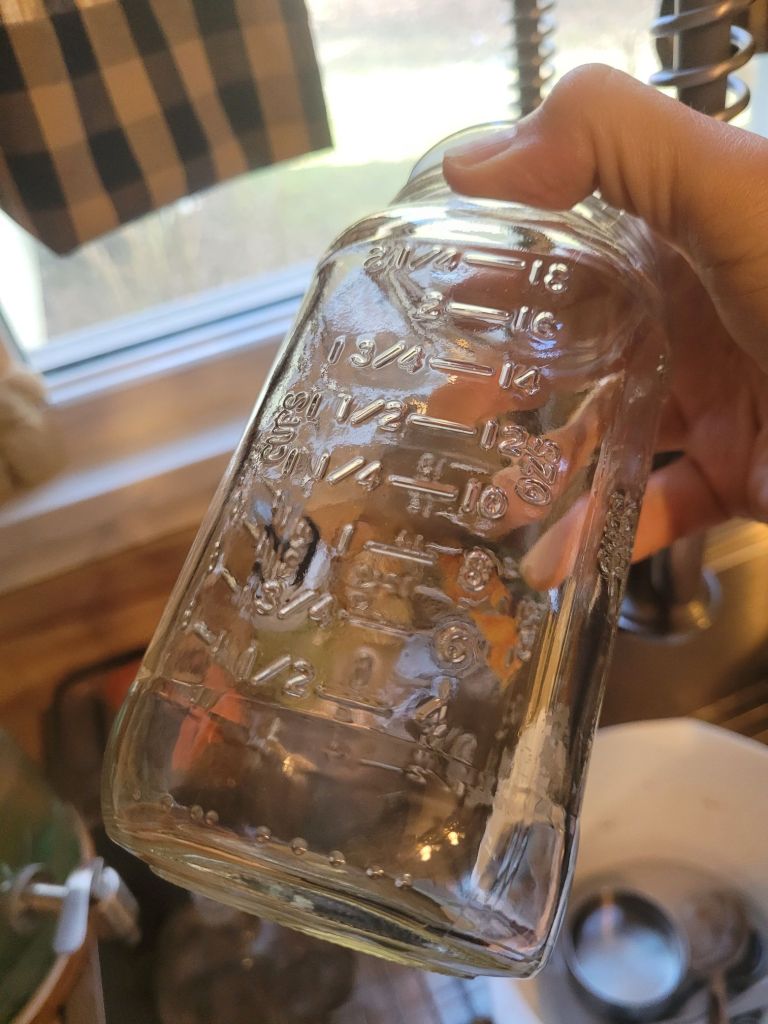
½ cup coconut oil, measured then melted
1/2 cup shredded coconut
1/2 cup dried berries and/or raisins
1/4 cup dried apricots, diced into small chunks
Preheat the oven to 325 degrees.
In a large bowl, combine the oats, slivered almonds, pumpkin seeds, chia seeds, flax seeds, sesame seeds, cinnamon, and salt until well mixed.
Melt the coconut oil in a small pan over low/medium heat until melted. Combine the coconut oil and maple syrup together, and mix in the vanilla.
Pour the oil/syrup mixture over the oat mixture, and use a spatula to mix it together so that everything is evenly coated.
Line two baking sheets with parchment paper (not wax paper, not aluminum foil), and evenly distribute the granola between the two sheets.
Keep the granola somewhat compact, because that prevents it from getting too crunchy; it allows the center to stay chewy, and the outside pieces to get a bit more crunchy.
Bake at 325 degrees for 12-14 minutes, or until starting to become slightly golden around the edges. Don’t bake longer than 14 minutes.
Allow the granola to cool for at least 10-15 minutes after baking. If you skip this step, then the granola won’t come together.
After it has cooled, add in all the extras like coconut flakes and dried fruit.
Each time I save a good jar from the recycling bin, I feel a little closer to my elders who went through the depression. I remember those comments… Hey, don’t throw that out. That’s a good jar!
I love how the cabinets and spice rack have changed since I started detoxing my home. Bye bye, plastic! Hello glass, steel & sustainability!
Many years back, at a rained-out fourth of July party, stuffed in a garage apartment with a bunch of people, I was talking to my friend Corey about an idea I had to investigate food additives and sources.
This must have been an idea for a newspaper column because the internet was (at the time) still in its infancy. Blogs hadn’t been invented yet, nor social media.
She thought about it for a moment and then foresaw how paralyzed a person would become, unable to make decisions about eating, unable to trust food and food sources, unable to relax and enjoy a meal.
Which got me thinking about the pressure on papers back then, needing advertising revenue to keep afloat, and needing to NOT offend the advertisers.
I didn’t pursue the idea.
Years later, I became aware of The Food Babe, Vani Hari, and was glad that someone had done this and was gaining a following.
This woman recently gained national attention when she spoke at a healthy foods round-table, which included Senator Ron Johnson and now-HHS secretary RFK, Jr., and other folks I’ve talked about on this blog, showing us the visible difference between the US formula for Froot Loops vs. the Canadian product.
Soon after, she led a group of protesters to the General Mills headquarters, where company officials refused to even come outside. She delivered a petition signed by thousands of people (including me), asking them to follow through on an old promise to remove dyes linked to ADHD and other behavioral issues.
Some General Mills employee even put a hand-written “Get Off My Lawn” sign in the window.
Her actions sparked change, and many people will benefit from it.
She is now part of the push to clean up infant formula. It’s so upsetting to find out that formulas often contain seed oils, corn syrup, and heavy metals. Are you kidding me?
I breastfed my kids, but I remember being admonished/warned by the pediatrician not to give my infant plain old water, or weak chamomile tea.
These were things that my mom and grandmother had given their babies (including me) in the heat of summer…. and we turned out fine!
Anyway, check out her website, sign up for her newsletter, or give her some likes or a follow on the socials.
I’m pretty bummed out after reading The Monsanto Papers and watching Into The Weeds. I found some links to dive even deeper into this sickening and upsetting content, because sometimes I just have to stare into the eye of Sauron, know what I mean?
So I found this interesting article from The Guardian, which more and more looks like the last source of true journalism left in the world…

 The Cancer Canary