Chili Night

I made a pot of chili last week, which disappeared quickly… so on Mother’s Day, I made another one, bigger this time.

I have been reading Fiber Fueled: The Plant-Based Gut Health Program for Losing Weight, Restoring Your Health, and Optimizing Your Microbiome by Dr. Will Bulsiewicz, and had just read about how good beans are for us, and for gut health. He also repeats the “30 different plant foods per week” rule.

So, yeah, I manifested it!

I started with 2 big celery stalks, a huge onion, some garlic cloves, a green bell pepper, and a yellow bell pepper. Chop and saute in olive oil.
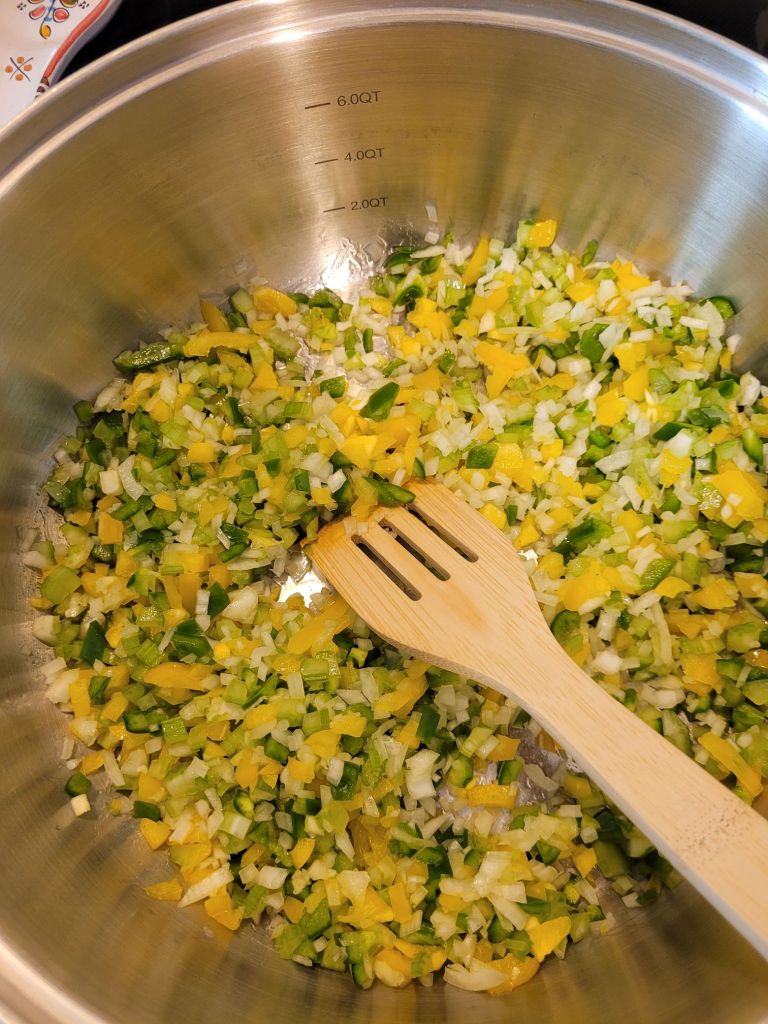
Add a pound of organic grass fed beef, and let it brown & meld together.

Then add 3 cans of beans, 1 can of chopped, stewed tomatoes. Maybe some sundried tomatoes in olive oil.

Let it simmer for a while. Spice it up with dark chili powder, cumin, curry, salt, and pepper.

I gotta say, it is so nice to be able to get so many organic options at Aldi. Seems like they are really listening to what people want and delivering the goods.
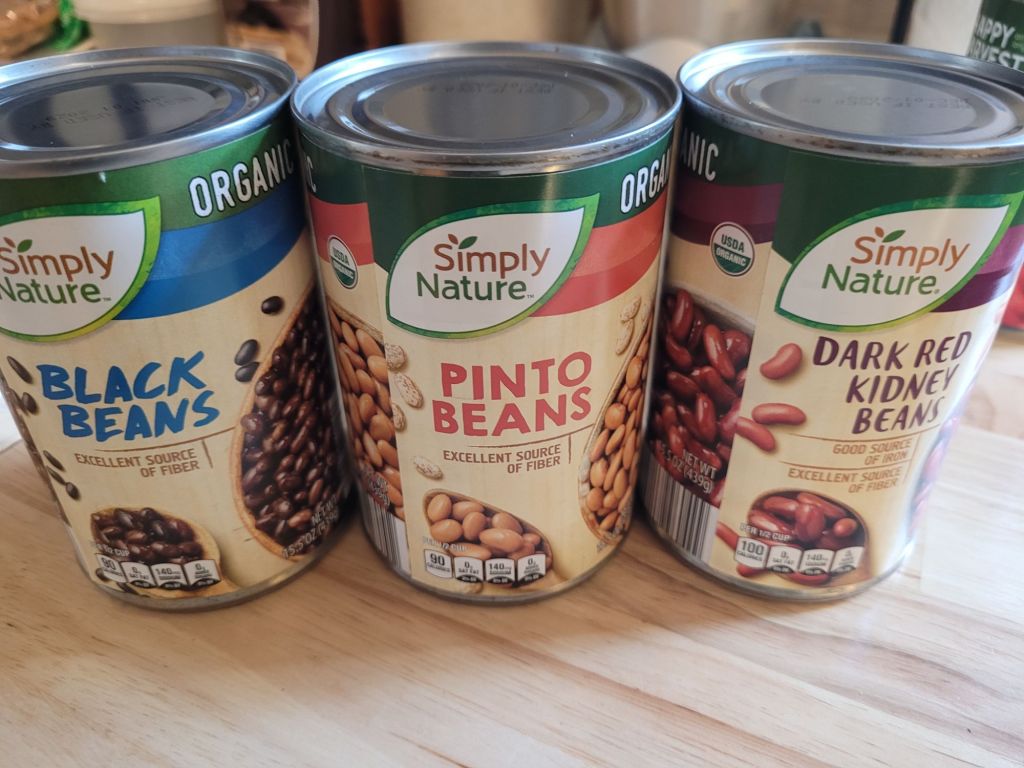
Aldi for the win 🏆

All three of these came up with a 100 score on the Yuka app. They each have only 3 ingredients… the beans themselves, sea salt and water.

I made a little salad of lettuce, tomatoes, and an avocado.

Plating: Start with a layer of organic corn chips, then add salad (no need for dressing),  then a big scoop or two of chili, plus cheese on top if you like. And maybe some chopped cilantro if you’ve got it.

So, how many different plant foods are in this meal? Eighteen, baby, in one meal!

🫘🤘🏻🫘🍅🫑🌶🧅🧄
Another Biome Breakthrough!

Check out this amazing research from the University of Florida and Trinity College Dublin:

https://www.sciencedaily.com/releases/2025/08/250821004244.htm

Queuosine is a rare micronutrient crucial for brain health, memory, stress response, and cancer defense. It is “a vitamin-like micronutrient that we can’t make ourselves but can only get from food and our gut bacteria.”

“For over 30 years, scientists have suspected that there had to be a transporter for this nutrient, but no one could find it,” said Valérie de Crécy-Lagard, a UF/IFAS microbiology and cell science distinguished professor and department associate chair, as well as one of the study’s principal investigators. “We’ve been hunting for it for a long time. This discovery opens up a whole new chapter in understanding how the microbiome and our diet can influence the translation of our genes.”

Very iteresting! We are starting to map the microbiota.

We Can Pickle That!

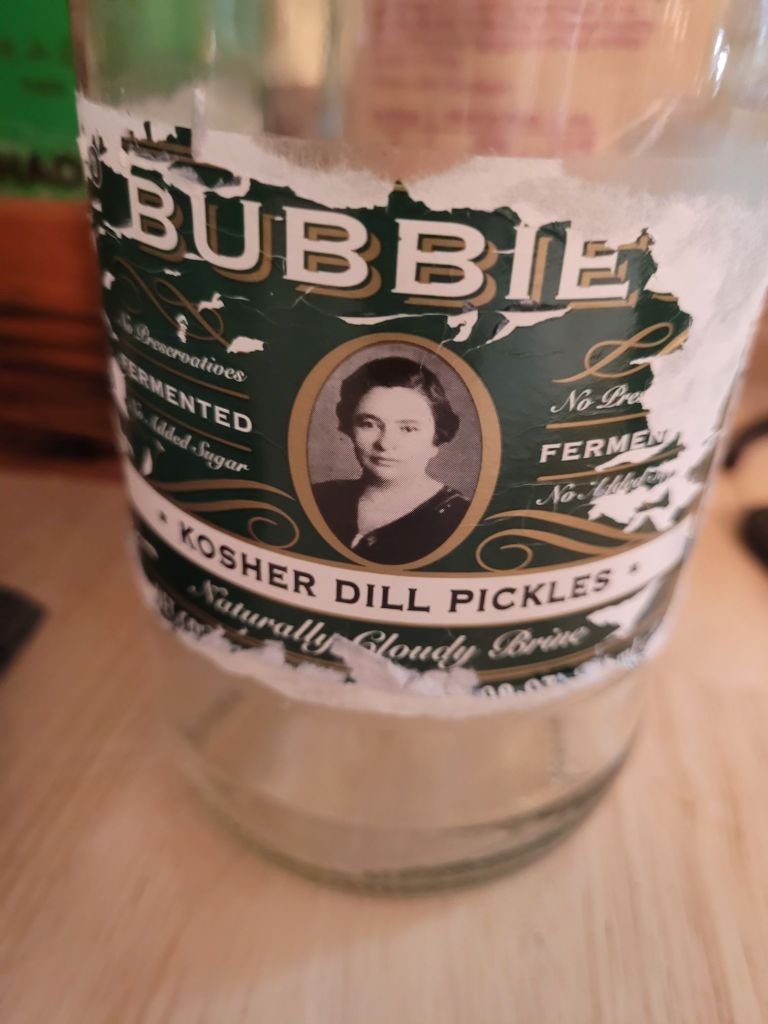
After a couple rounds in the dishwasher, this jar still smells like pickles!

Just wanted to share. Bubbie’s is a brand of fermented foods, and we have tried a couple of their products. They taste great and are fermented so you get a little probiotic boost.

I was thinking the other day that, if every deli and hamburger joint in America started using Bubbie’s pickles, what an improvement we would have in our overall gut health.

https://www.bubbies.com/

The Biome & and Heart Disease

If I ever come into a large sum of money I’d like to put my friend Mike through medical school. He’s very smart, patient, and observant and he would do well in the research world.

He recently sent this article my way:

https://english.elpais.com/health/2025-07-17/revolution-in-medicine-a-molecule-produced-by-gut-bacteria-causes-atherosclerosis-responsible-for-millions-of-deaths.html

Here are the takeaways:

  • Researchers have discovered that gut bacteria produce a molecule (called imidazole propionate) that causes atherosclerosis, the accumulation of fat and cholesterol in the arteries, which can lead to heart attacks and strokes.
  • 63% of the study participants showed signs of the disease.
  • Imidazole propionate enters the blood, interacts with immature white blood cells, and triggers an inflammatory reaction in the arteries, which promotes the buildup of fatty plaques.
  • These results are unexpected, linking microbes and cardiovascular disease — the leading cause of death in humanity.
  • One of the study’s authors had already discovered in 2018 that imidazole propionate levels were higher in people with type 2 diabetes.
  • Blood levels of imidazole propionate are lower in people with diets rich in vegetables, fruits, whole grains, fish, tea, and low-fat dairy products.

What I want to know is how could a person know if they have this gut bacteria?

Are there foods you can eat to kill it off?

Not, sure I’ve ever mentioned it here, but did you know that most medical schools in the US don’t require nutrition training?

Maybe that will change soon.🤞 Here’s hoping.

The article ends with this tidbit:

Cases of colorectal cancer are skyrocketing in people under the age of 50, due to unknown causes, doubling in many countries in the last two decades. Another study, led by computational biologist Marcos Díaz Gay, suggested just three months ago that behind this colorectal cancer epidemic is the Escherichia coli toxin. “In young patients, up to 39 years of age, we see that colibactin pattern in one out of every three cases,” stressed Díaz Gay, of the National Cancer Research Center.

30 for 30

I used to struggle to get 30 different types of plant foods in my diet each week. As I’ve been doing this for a while now — and enjoying the benefits of a much healthier tummy — I thought I’d share a few secrets.


Coffee Klatch ☕️

Every morning, I begin with coffee and add to it about 1 tablespoon of chaga, which is a mushroom product.

Two down, 28 to go!


Tea for Two 🫖

Teas count! I usually have a cup of herbal tea after my morning coffee. My favorite is ginger turmeric, but of course, I mix it up… each day is different. 

I’m going to estimate that you’ll get at least 3 plant foods and their wonderful micronutrients in one cup of tea.

Add a lemon, lime, or orange slice? You’ve got 4.

What’s the tally now? Six plant foods! 24 to go!


Nuts to You 🌰🥜🐿

We like to keep a couple of jars of nuts in the den… easy access to healthy snacks when movie time rolls around. We keep a big one just for cashews, a small one for pistachios, and a medium-sized one for mixed nuts from Aldi, which includes peanuts, pecans, almonds and hazelnuts.

Ok, so a handful here and there throughout the week equals 6 of your 30 plant-based foods. And just having them around will help curb your desire for the unhealthy stuff.

Ok, add 6 to the tally. 18 to go!


Shoot Some Salad, Salad Shooter 🥗🔫

I’m making a big salad for tonight, and marinating some chicken for Jimmy to grill.

Here’s the salad ingredients in tonight’s mix: romaine lettuce, baby spinach, baby chard, baby kale, broccoli sprouts, tomatoes, cucumber slices, celery, sweet pepper slices, avocado, olives, and green onion. 

There’s enough for 4 of us to eat, and I’m pretty sure there will be leftovers for tomorrow. I’m not too proud to eat yesterday’s dressed salad. It takes on a giardiniera vibe.

Ok, that’s 12 more plant foods to add to the tally.

If you count the red wine vinegar I use in the dressing, it makes 13! I’m not going to count the dried herbs, though…

18 – 13 = 5 more to go!


Fruit Salad, Yummy Yummy 🍉🍒🫐🍓🍍

It’s summer, and there’s a ton of ripe fruit available, so take advantage while you can.

This morning, we finished a pineapple at breakfast.

My lunch was apple chunks with peanut butter drizzle.

On the dinner table, I set out blueberries, watermelon, and cherries. So there’s 5 more plant foods for today!

5 – 5 = 0! I got 30 in one day! Now, any new veggie to cross my path is just a bonus!

Easy, healthy, and delicious!

The Dangers of Seed Oils

I have wanted to write about this for a while but I’m a bit out of my depth, and so I’ve put it off… but it is critically important and the little that I know has really changed my eating habits.

I recently came across this Instagram post by Dr. Mark Hyman, which sums it up nicely.

Canker Sores

A bit off topic, but related in terms of a healthy microbiome…

I used to get canker sores frequently, and if you’ve ever had one, you know they’re horrible! Your lip swells, you accidentally bite it when trying to eat, it makes talking complicated, and it’s really painful! There’s nothing good about canker sores.

I talked to my dentist about it a while back, and he recommended a certain mouthwash that didn’t help.

I had noticed in the past that if I used Listerine, I’d end up with another one or two sores. It made the problem much worse. I had also tried salt, saltwater rinses, and campho-phenique, which helped a bit but didn’t solve the problem.

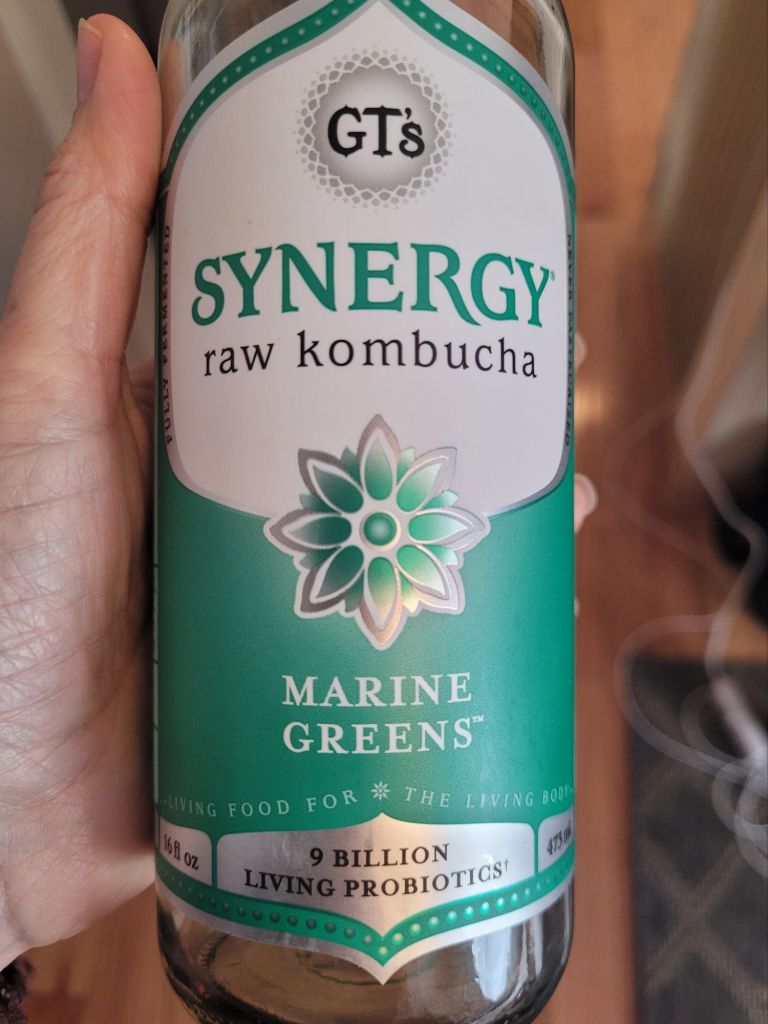
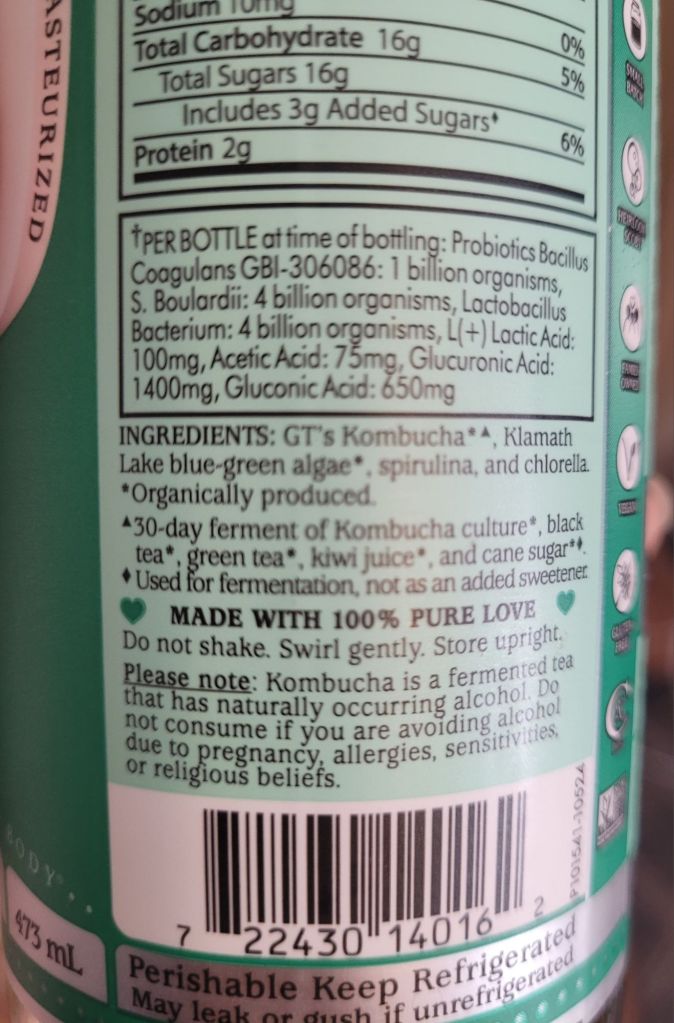
Then I started drinking kombucha, and they’ve disappeared. They are just gone. It’s like magic. Lifelong problem solved!

I did tell my dentist in the hopes that he and his staff would tell others. I’ll have to ask at my next cleaning and see if they are.

When I first got diagnosed and met my hematologist, he mentioned that many people with CLL also have a lot of canker sores. I told him how I fixed mine. Not sure what he’s done with that knowledge. I’ll have to follow up.

Anyway, I was talking to my sister yesterday evening and she had a canker… I told her about kombucha, and she said that she would double up on the probiotics. I told her that probiotics in the pill form had never helped me, but kombucha does.

This morning, she texted to say that she’s using kombucha and already feels better. 🌞


P.S. What if the common canker sore was seen and widely recognized as an early sign of poor gut health, and people knew what to do about it? 

What if doctors knew to recommend probiotics and postbiotics (to rebuild a healthy gut) rather than recommending an antiseptic type of mouthwash that actually kills more of the good bacteria?