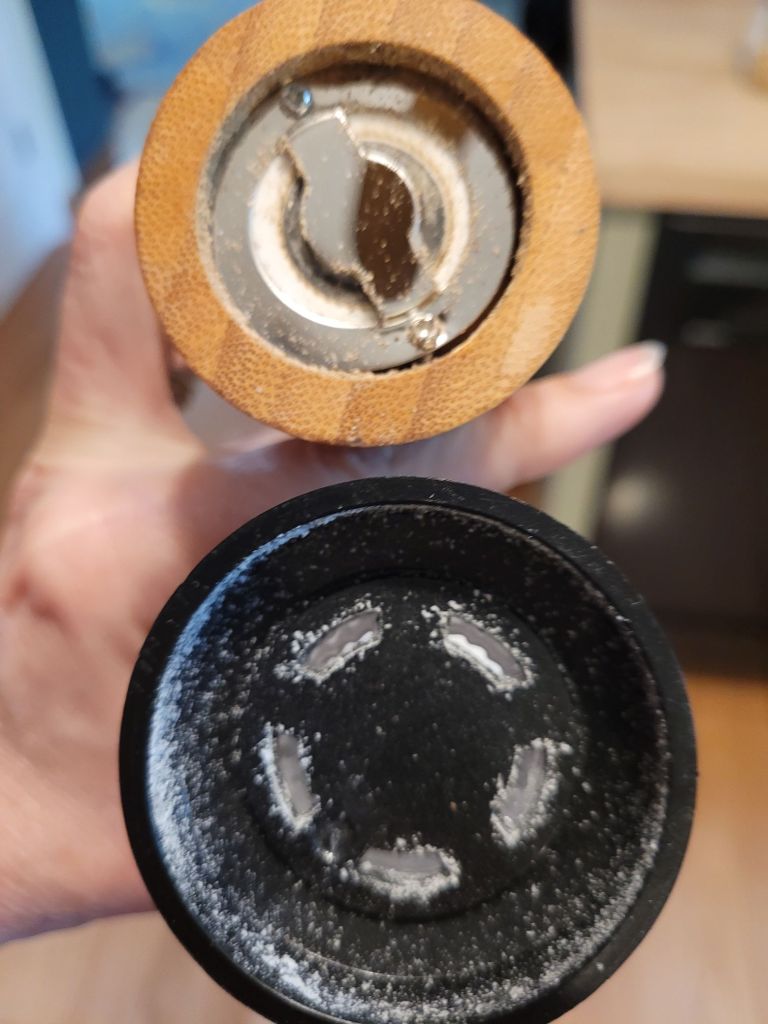
Was using my salt and pepper grinders today and realized that they BOTH have plastic grinding gears … yet another way for microplastics (or not-so-micro-plastics) to break off, get into our food, and then be consumed.
I’m throwing them out!!

Was using my salt and pepper grinders today and realized that they BOTH have plastic grinding gears … yet another way for microplastics (or not-so-micro-plastics) to break off, get into our food, and then be consumed.
I’m throwing them out!!

A few years ago, my son wanted to get me a Mother’s Day gift I would use… so he asked what I wanted, and I said an egg pan that was not Teflon coated but didn’t take all day to clean.
Tall order, I thought.
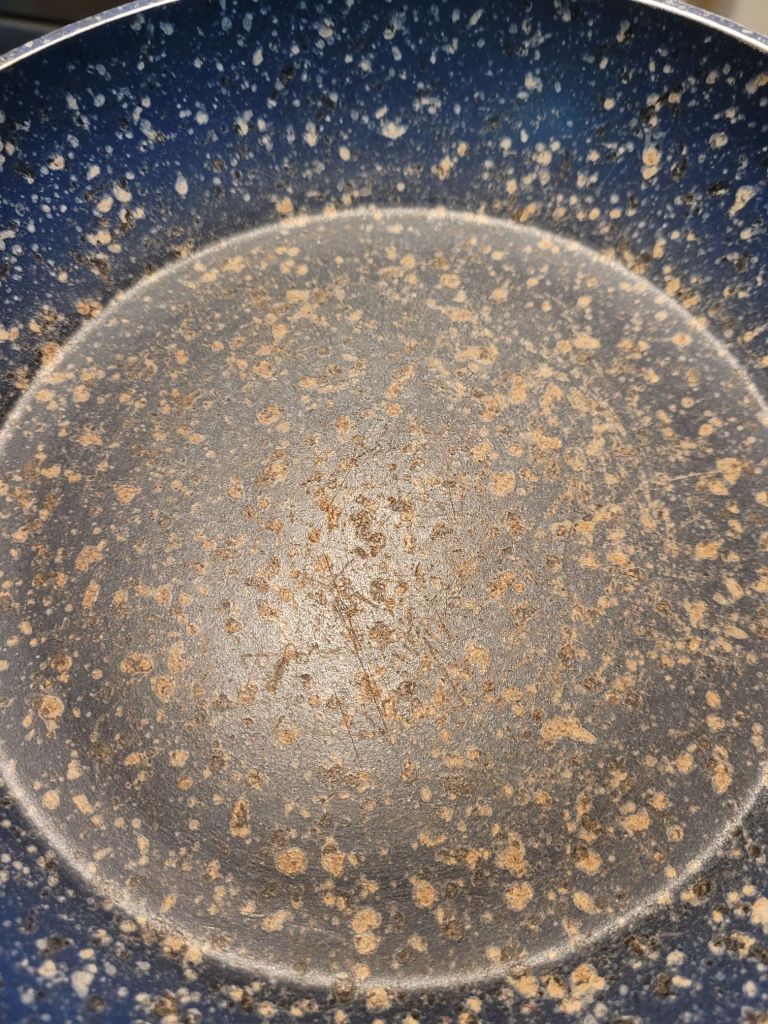
He got me two non-stick granite pans made by Michaelangelo. They looked good and worked great and I was really pleased.
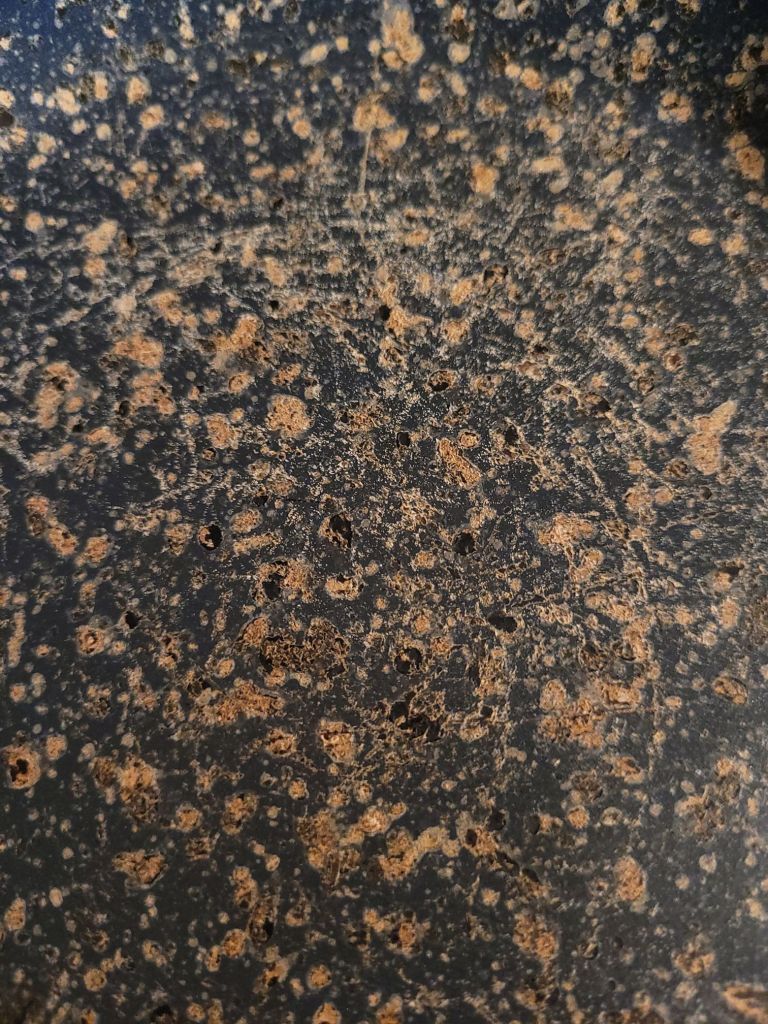
Time has passed, and the surfaces have gotten fuzzy from repeated cleaning… and they’ve been pushed to the back of the cabinet as we have used the cast irons more and more.
But I wonder… what are granite pans made of anyway?
I Googled around and found that they are “not actually made of granite stone, but named for its resemblance to the texture.”
Okay, but what are the pans made of?
Seems there are 2 kinds: Teflon (PTFE) and vitreous enamel.
For both types, it is recommended that you use soft utensils when cooking and wash them carefully to avoid scratches or pitting.
The Michaelangelo website sells these pans labelled as “100% Toxic-Free — Free of PFAS, PFOA, lead and cadmium.” I sure hope that is true!

Anyway, these are too scratched up. Throwing them away!

I’m pretty bummed out after reading The Monsanto Papers and watching Into The Weeds. I found some links to dive even deeper into this sickening and upsetting content, because sometimes I just have to stare into the eye of Sauron, know what I mean?
So I found this interesting article from The Guardian, which more and more looks like the last source of true journalism left in the world…
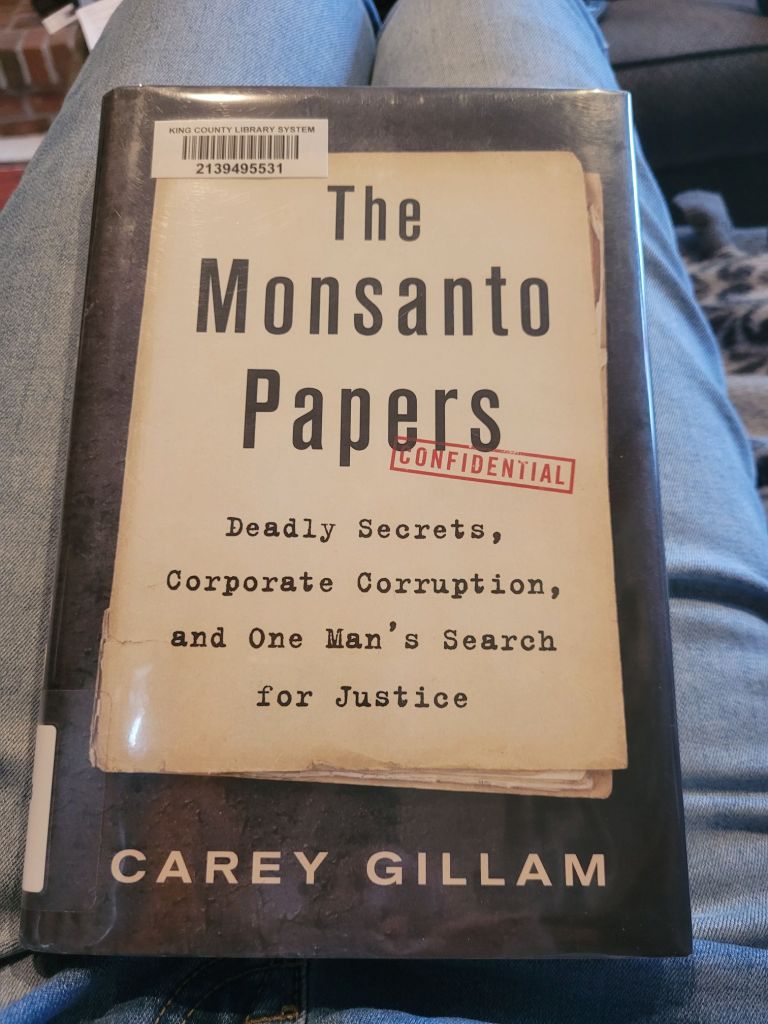
I’ve been traveling a bit, down to Florida, to see family and work on our old house. Along the way, I’ve been reading The Monsanto Papers by Carey Gilliam.
This is the story of the lawyers who took on Monsanto, the plaintiffs they represented, and many internal emails and documents from within Monsanto that were shared with the public in 2017.

There are parts of this book that made my mutated blood boil.
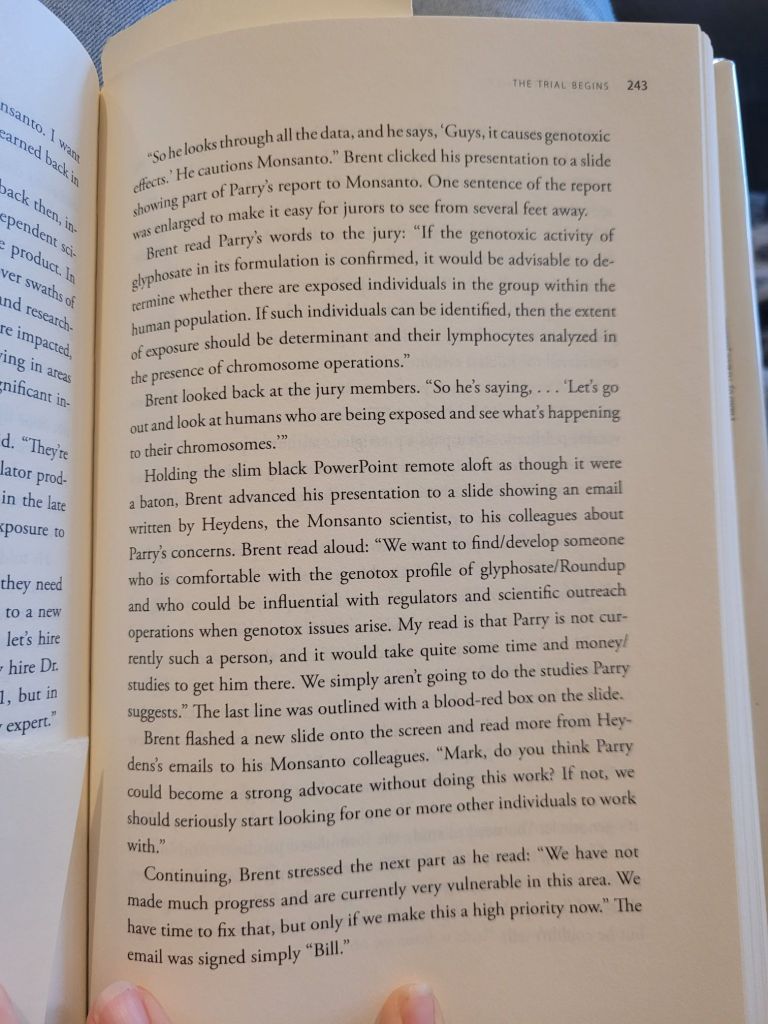
For example, this passage from page 243. This is text from the court testimony of Dewayne Johnson vs. Monsanto Company, showing internal an email from Dr. James Parry, indicating not only that the company knew – in the 1990s – that glyphosate caused cancer, but that they knew to look for mutations of the lymphocytes.
They already knew which cell would be affected first.

Even though the plaintiff won his case, and even though more and more cases came to trial, and even though there was a flurry of publicity surrounding each one… glyphosate is still the most used herbicide on the planet.
It’s still used as a desiccant during harvests.
And it’s still in most foods you can buy in any American supermarket.
If you’d like to know more, there’s a film called Into The Weeds which shows scenes from the courtroom. You’ll get to know Dewayne Johnson and hear and see his heartbreaking story. The film can be streamed for $2.99 through Amazon.
Carey Gilliam has written a few other books on this topic, and there are some interesting interviews with her on YouTube.
https://www.intotheweedsimpact.com/
It will make you sick, literally and figuratively.
I have wanted to write about this for a while but I’m a bit out of my depth, and so I’ve put it off… but it is critically important and the little that I know has really changed my eating habits.
I recently came across this Instagram post by Dr. Mark Hyman, which sums it up nicely.
Hope you guess my name.
We’ve all heard that Rolling Stones song a million times: Sympathy for the Devil.
Today’s post is about sugar — and all the names that particular devil hides behind. Take a look … then go look at the ingredients panel on a few items in your kitchen.
● Agave juice
● Agave nectar
● Agave syrup
● Beet sugar
● Blackstrap molasses
● Brown rice syrup
● Brown sugar
● Buttered syrup
● Cane juice
● Cane juice crystals
● Cane sugar
● Cane syrup
● Caramel
● Carob syrup
● Castor sugar
● Coconut sugar
● Confectioners’ sugar
● Corn glucose syrup
● Corn syrup
● Corn syrup solids
● Crystalline fructose
● Date sugar/syrup
● Demerara sugar
● Dextrose
● Drimol
● Ethyl maltol
● Evaporated cane juice
● Flo malt
● Florida crystals
● Fructose
● Fructose corn syrup
● Fructose syrup
● Fructose sweetener
● Fruit fructose
● Fruit juice
● Fruit juice concentrates
● Glucose
● Glucose solids
● Glucose syrup
● Golden sugar
● Golden syrup
● Granular sweetener
● Granulated sugar
● Grape sugar
● High fructose corn syrup
● Honey
● Honibake
● Icing sugar
● Inverted sugar
● Isoglucose
● Isomaltulose
● Kona-ame
● Maize syrup
● Malt syrup
● Maltodextrin
● Maltose
● Maple
● Maple sugar
● Maple syrup
● Mizu-ame
● Molasses
● Muscovado sugar
● Nulomoline
● Panela sugar
● Powdered sugar
● Raw sugar
● Refiner’s syrup
● Rice syrup
● Sorghum syrup
● Starch sweetener
● Sucanat
● Sucrovert
● Sugar beet
● Treacle or treacle sugar
● Turbinado sugar
● Unrefined sugar
● Yellow sugar
Sugar Alcohols:
● Erythritol
● Hydrogenated starch hydrolysates
● Isomalt
● Lactitol
● Maltitol
● Mannitol
● Sorbitol
● Xylitol
Puzzlin’ you is the nature of my game!